Tag Archives: Life

Fatal Enquiry, or How I Ditched Work to Be a Fan

A couple Wednesdays ago, the day seemed normal enough. I woke, messed about with e-mail and Facebook and the daily news, then settled down to the business of writing and research.

And then the mail came, and with the junk mail and coupons was a package. Inside that package was a book I’d pre-ordered in September last year. And forgotten.

I’ve been a huge fan of Will Thomas‘s Barker & Llewellyn series since reading Some Danger Involved. I picked up the paperback, riffled through the pages, read the back copy. A mystery set in Victorian London, with interesting characters and solid writing, something that looked like the work of a Holmes and Watson fan, but was it’s own thing? Yeah, sure, I’d give it try.

Glad I did. The detective–ahem, pardon me, the enquiry agent–is somewhat Holmesian, and yet Barker is vastly different. He wears tinted glasses at all times, is particular about his green tea, has a Pug for a pet, and frequents a sketchy underground eating establishment. The occupants of his household and those who operate on the fringes of society are equally intriguing and amusing.

Thomas lets the stories play out against the backdrop of actual historical events, weaving issues of the day into the plots, and letting real historical figures wander about the scenery and interact with the characters. While each book revolves around its own mystery, there’s also an overarching mystery involving Barker’s past. His fellow agent is young, likable, romantic Llewellyn, quickly learning the trade and getting into this fix or that. It is by him we are led through much of each story.

FatalEnquiry-front coverAbout that long-ordered-but-forgotten book? Fatal Enquiry, the latest in the series.
It arrived one day after the official publication date, and on the same day as the first book signing.

Two hours away.

A mere two hours away.

A favorite author, a brand new book–how could I not go?

But I was also low on cash, low on fuel, and had a writing deadline in view.

Eh. Deadline, schmedline.

The weather was beautiful, the traffic scarce, and as I am wont to do while traveling, I held my camera up to the windows and took random shots of buildings, card, clouds, whatever struck my fancy. Most of those photos didn’t turn out, of course, but some were better than expected. It’s a weird bent, perhaps, but it’s my way of recording a journey.

The directions were a bit wonky at the end, so rather than being a few minutes early for the signing, I arrived several minutes late. The talk was well underway. Argh. Still, I was able to listen to the bulk of it and learn interesting trivia, such as the fact that Thomas’s research into archaic fighting methods led to the compiling of a manual on the subject and to the creation of new martial arts clubs around the world. All because he asked a question for a novel. (Read more about the author here.)

Thomas read a selection from the new novel, then the actual signing began.

It was the most low-key yet intensely interesting book signing I’ve attended. Some have been rah-rah rallies, some have been an author sitting at a table. This one? Not only was the audience educated, fun was had by all.

If you have not discovered this mystery series, please do give it a try. Click on the book titles in the list to read excerpts of each:
Some Danger Involved
To Kingdom Come
The Limehouse Text
The Hellfire Conspiracy
The Black Hand
Fatal Enquiry

I have not yet been able to read my copy of Fatal Enquiry due to an unexpected change of schedule taking me out of state, but I hope to remedy that in the coming week or two. Meantime, below are a few shots I took while at the signing, which was held at Retro Den, a nifty shop specializing in all things yesteryear.

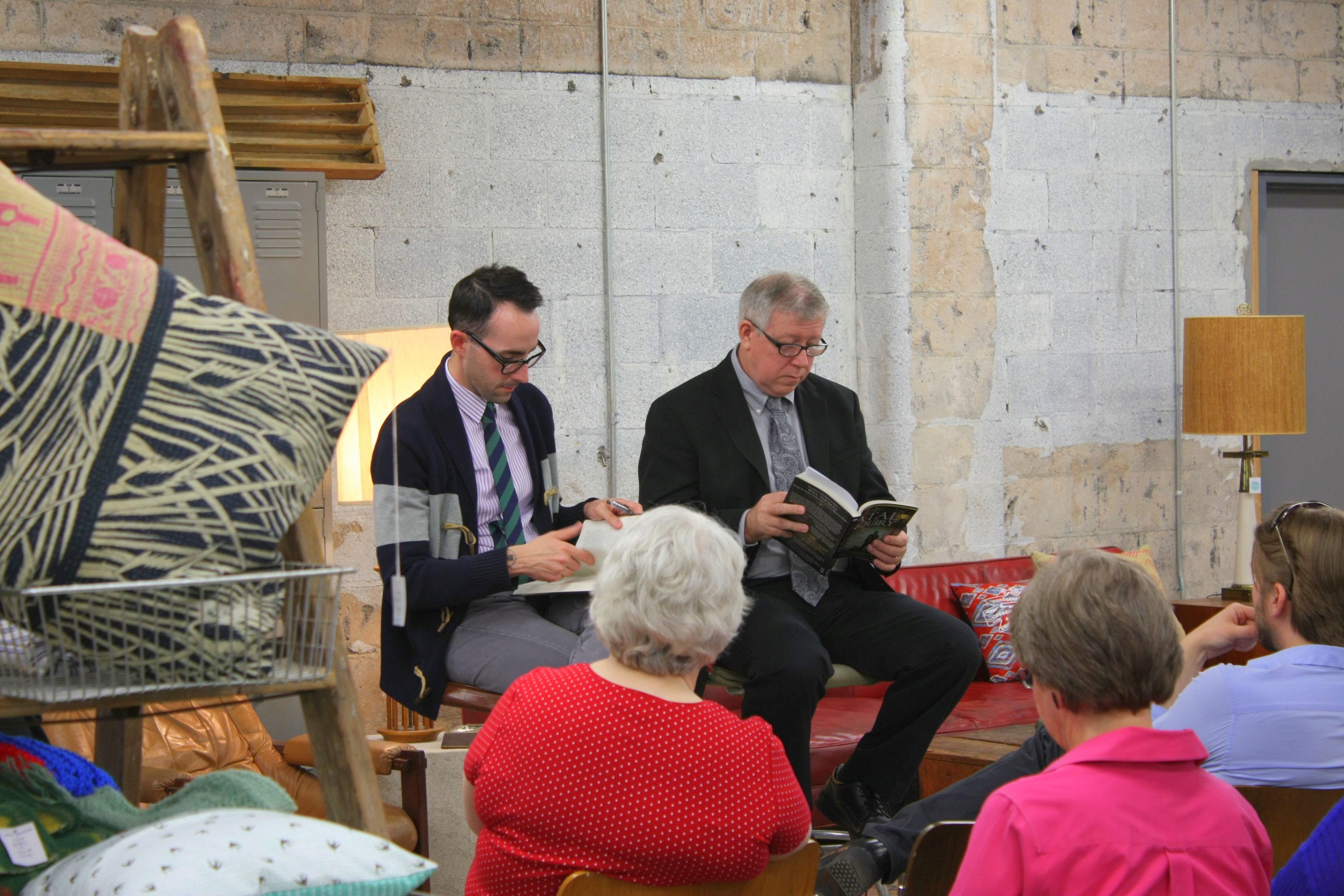
moderator and Will Thomas, Fatal Enquiry book signing at Retro Den (c2014, KB)
c2014, KB
A haphazard queue (c2014, KB)
Fancy some furniture? How 'bout an art piece or two? (c2014, KB)
Fancy some furniture? How ’bout an art piece or two? (c2014, KB)
c2014, KB
A fan waits patiently (c2014, KB)

Feedback: More Than Static

Below is a re-blog of a post over on Adventures in Fiction, a blog by Keanan Brand. He discusses feedback he recently received for a story in progress, and decides what he wants more: applause or participation?

Kishi kaisei.
Wake from death and return to life.

Tade kuu mushi mo sukizuki.
There are even bugs who eat knotweed.
(To each his own.)

I’ve been developing a short fantasy set in Japan, in an era and a culture about which I know little. That means delving into reading about all manner of topics: honorifics, architecture, food, names, proverbs. I’m tempted to fill the story with Japanese terminology, but I don’t know what’s true to the period and what’s modern. And tossing in every word I learn would overwhelm the plot, and distract or annoy the reader, so I’m backing off, using the literary equivalent of a pinch of salt. A taste, not a stomachful.

An interesting dish — but who wants to eat it?

As with everything I write, I wonder, “Who’d want to read this? Am I writing only for myself? Am I okay with that?”

My reading at the most recent writers meeting was an attempt to answer those questions. I brought my first two thousand words of the Japanese fantasy and invited the other members to tear into it. The story needs to be solid, because it will be competing against other and far better writers, and I want to do my best so there are no regrets if I lose. No excuses.

The group followed along as I read but made few notes on their copies of the pages, which was unexpected. My own copy was littered with notes before the meeting ended. The responses were favorable, the speculations thick and fast, the suggestions and critiques constructive.

It was the most — what’s the word? — refreshing critique session since, well, never.

In a prior group, my speculative stories were met with negativity, so I stopped sharing, stopped asking for feedback. The writer went into hibernation, and only the editor showed up for meetings.

At first, I believed the bad press: “Your stories are too difficult to understand” or “You’re not connecting with your audience.” While that may have been partly true, I came to realize that the audience — certain members of it — were never going to connect. Their understanding of and approach to reading left little room for deviations from their personal expectations: A story must look like this and not that.

With realization came renewed confidence. Nah, the audience didn’t change, but it stopped mattering. I could predict which of my stories they’d like — the more conventional ones — and which would make their eyes glaze and their mouths purse.

A new state and two writers groups later, I’ve landed with a mixed flock of hatchlings, most still in the nest, some just now recognizing their wings, some learning to fly. They’re fearless, though, sharing their earnest romances and troubled life stories, their awkward urban fantasies and sophisticated twisted fairy tales. They tell each other what they like and what they don’t understand, what’s not working and what piques their imagination.

The group works. I can’t explain it, but it works.

Maybe because the nasty black-hat villain Ego hasn’t arrived.

So I shared. They responded. It was good.

People have read my stories in publications, but it doesn’t necessarily occur to readers to contact authors and tell how the story affected them, how it stayed in their minds for days or roamed their dreams at night. How it made them cry, scream, laugh, think.

The response from my fellow writers the other night was like applause at a live play, accompanied by an honest but non-mean-spirited review.

I don’t need flattery or compliments or pats on the head.

As nice as it is, I don’t need applause.

What I crave? Capturing readers’ imaginations to such a degree that they fill in the details I didn’t describe. They journey alongside the characters, and talk to them, emote with them, live through them. The story matters so much to the readers they lose sleep to finish it. They argue with friends over why a character did this or said that. They can’t wait for the next story.

My cousin's son, hamming for the camera, always ready for the laughs and the applause! (c2013, KB)
My cousin’s son, hamming for the camera, always ready for the laughs and the applause! (c2013, KB)

Participation. That’s what I want.

Better than applause any day.

That Junior High Feeling

Below is a quote from Jenny Simmons, musician and writer, in her blog post The Christian Industrial Complex and Why I Am Doing a Kickstarter Campaignabout the obstacles facing us un-famous creative folk:

Regarding my book, The Road to Becoming, I’ve met with a handful of literary agents and Christian publishing houses. One executive told me I sent in the best book proposal he has seen in a long time. Another said my writing style was laugh-out-loud, contagiously authentic. One agent said “there is room for this story at the table” another said the book is “spiritually profound” and and another said “this book will be a close spiritual companion to many.”  But at the end of the day each publishing house or literary agent has ultimately said-

We love this book but you’re not popular enough right now for us to take a risk on you. 

One Christian publishing house even went as far as telling my manager that I don’t have enough “heat.”  When asked for a clarification the executive said, “Look, if she is a mega-church pastor, we will give her a deal. If you come back tomorrow and tell us she got picked up by a major women’s conference and has a major platform, we will give her a deal.”

It kind of feels like junior high all over again.
Popular. Platform. Heat.

I’ve known  that junior high feeling. Man times. But I’m breaking free.
For anyone who has ever encountered the same attitudes, or who’s just now trying to break into the writing biz, I recommend reading the entire article.

Letters

(c2013, EE)
(c2013, EE)

In my closet is a box of handwritten epistles inside envelopes. Yellowing envelopes from my late grandmother. Decorated envelopes from an artistic friend. Varicolored envelopes that contain holiday cards. Bulging envelopes holding old stories exchanged between friends. Sometimes I open the box and read the letters, and hear once more my grandmother’s voice.

There was a time I could neither read nor write enough letters. I waited impatiently for them. I scribbled them when something unexpected happened, or when my friends wouldn’t write fast enough.

Along came instant messaging, internet chat rooms, e-mail, and communication flew between us. I reveled in the instant exchange of news and ideas.

But the charm faded. I couldn’t get away from people. There were questions demanding immediate answers. Friends or colleagues  planning events or meetings, often last-minute. My digital inbox expanded. An accusing mouse pointer or blinking cursor prodded me to drop everything and communicate. Now.

That pushiness is one reason I’ve never owned a cell phone. When I owned a landline, there were days I’d let the answering machine catch calls. A wielder of words, I had nothing to say.

As years passed, as career shifted, I’ve relaxed communications. A message may sit in the e-mail box for a few days before I compose a response. Although most messages I receive are the digital equivalent of casual scrawls, even from my colleagues in the professional realm, I tend to write as if each message is a letter. There are paragraphs, proper sentence structure, no text-speak. There is still courtesy.

A few days ago, engaged in spring cleaning, I found odds-and-ends of stationery. The paper is excellent, and the feel of its thick texture against my fingertips renders me nostalgic. Some of it is printed with designs at the bottom or along one edge, leftovers from my adolescence or from someone’s humorous birthday gift a decade or more ago. Some paper is still attached to a gum-adhesive strip at the top, keeping the leaves together, and much is loose-leaf, stacks of pale parchment waiting careful calligraphy.

How impatient will friends and acquaintances be if their e-mail receives reply by post?

Or will they look on the envelopes in puzzlement?

I wonder.

This Book, Right Now

It’s an epic, never-ending battle between mind and emotions: Who cares? Who’s gonna read this? Is it a story worth telling? Well, dagnabbit, I’m a wordsmith; of course it’s good! No, no, it’s utter garbage.

Doesn’t matter how many books you’ve written — none or dozens.

Doesn’t matter how many reviews you’ve gained — none or hundreds.

Doesn’t matter how many books you’ve sold — none or millions.

It’s all about the book in front of you.

What I’m about to write may seem to contradict what I wrote in Mentors v. Gatekeepers, which is about finding mentors to teach us, and breaking free of the gatekeepers who might try to keep our stories from reaching the world.

However, as much as I am a dreamer, I’m also a realist. No writer is perfect. We all need an objective eye. That perspective can come from a critique partner, a writers group, an agent, an editor. We need that honest person who’ll say, “I understand you’re trying to make us feel the wind, but this sentence crashes to ground.”

We might, on occasion, pen a short story or a poem that needs minimal revising, or none. Sometimes we’ll write a scene or a chapter that is barely edited, if it’s edited at all, because it’s good from the beginning. However, those rare glimpses of perfection should not be mistaken for signs that we have nothing more to learn.

Sure, you might win contests, awards, accolades, admiration, celebrity, financial success.

Sure, you might publish a string of bestsellers.

Sure, you could kick back and rest on the smug knowledge that you have written, and written well.

But all that falls away in the presence of the book you’re writing now.

This book, right now.

Will you dash it off, not spending the same time and care as you might have done when you were green and uncertain? When you were hungry?

Or will you be even more precise with your choices, your efforts, knowing that you owe your readers your best, although readers owe you nothing?

Until recently, I edited manuscripts for a publisher. It was challenging and educational, and far less glamorous and lucrative than some might expect. Many manuscripts should never have been given contracts, because either the stories or the writing weren’t ready for publication, and read more like works in progress rather than final drafts. But there were many that only needed a scene rewrite here or there, dialogue revisions, minor proofing, or expanded endings.*

The point is this: every manuscript needed an editor.
bookstore entrance (c2011, KB)
bookstore entrance
(c2011, KB)

However, one major reason I am no longer working for the publisher is the notion that some writers are perfect, their work approaching the sanctity of Holy Writ. I was given the resumes and bios of certain writers, not merely to inform me of their background, but to tell me — without the actual words being said — Here There Be Untouchables. I was expected to do my job so lightly that egos were stroked without being ruffled.

Anyone who knows me also knows I am not an ego-stroker. I give praise and encouragement, but I will not flatter. Flattery stresses me. Flattery makes my insides curl up like frightened potato bugs.

So does letting a problem fester and lie there without being addressed. I hate confrontation, but dealing with a problem is necessary. It’s like feng shui for the soul.

After the latest round of flatter-don’t-edit, I turned in my resignation. (Read more about it here: “When It’s Time To Go“.)

Just as writers aren’t perfect, neither are editors. I’ve made my share of mistakes. I’ve been the pompous youngster who thought he knew far more than he actually did. Memories of past stupidities still make me shudder.

And I’m a writer, too, so there are even more past mistakes to make me want to hide under a blanket until everyone forgets I’m an idiot.

Pride and insecurity are two fires that fuel writerly angst and sensitivity. Pride stings when someone pokes, stabs, or slaps it. Pride doesn’t like it when someone says, “That scene doesn’t work” or “This chapter is boring.” Pride wants to cross its arms and ignore the negative feedback, or even to draw a verbal sword and attack the critic.

I know. I battled stung pride a couple days ago, wanting to stab back at a reader whose own arrogance overshadowed his advice.

But I’ve been here before. I’ve learned to sift through the feedback, take what I need, discard the rest.

I can’t pull out my past awards, my references, all the contest certificates or publishing credits. They’re nice on a resume, but they don’t have any bearing on the book in front of me.

Like every other writer, all I can do is my best on this book, right now.


* One disservice, I believe, television and movies have done to modern fiction is the rush to an ending. Back when The Lord of the Rings film trilogy was finally complete, and The Return of the King came to theatres, some viewers complained about the long ending. Those viewers had likely never read the book, in which essential story continued past the main battle. The conflict wasn’t over, and there was still an enemy or two to deal with. But that’s like real life, eh? There’s always something.


Cold Heart, Kindly Meant

In recent months, I’ve been approached by new writers seeking to self-publish their work, and have participated in a few discussions about and with independent authors. As a result, I’ve come to this conclusion: Regardless of literary skill or monetary remuneration, one’s self-discipline and willingness to keep learning are important to one’s success. (And one’s definition of success is important, as well.)

Some of the authors I’ve met understood their manuscripts’ need for good editing, but have wanted it at little or no expense. I understand that. I’d love to obtain excellent products at no cost to me. Free housing, free utilities, free whatever — that’d be great, huh?

But we appreciate and cherish that which we gained at great cost, that for which we sacrificed.

So, despite how cold-hearted these words may seem to new writers in search of praise and handouts, I say, “Suck it up. Work it out. Learn. Strive. Improve. Don’t whine. Grow up. Bind your wounds. Stand on your own feet. Know when to ask for help. Keep fighting. Know your worth. Be humble. And in the words of Bill and Ted, be excellent.”

Cold Spell ("I'll get you, my pretties!") c2013, EE
Cold Spell (“I’ll get you, my pretties!”)
c2013, EE

Signposts of Hope

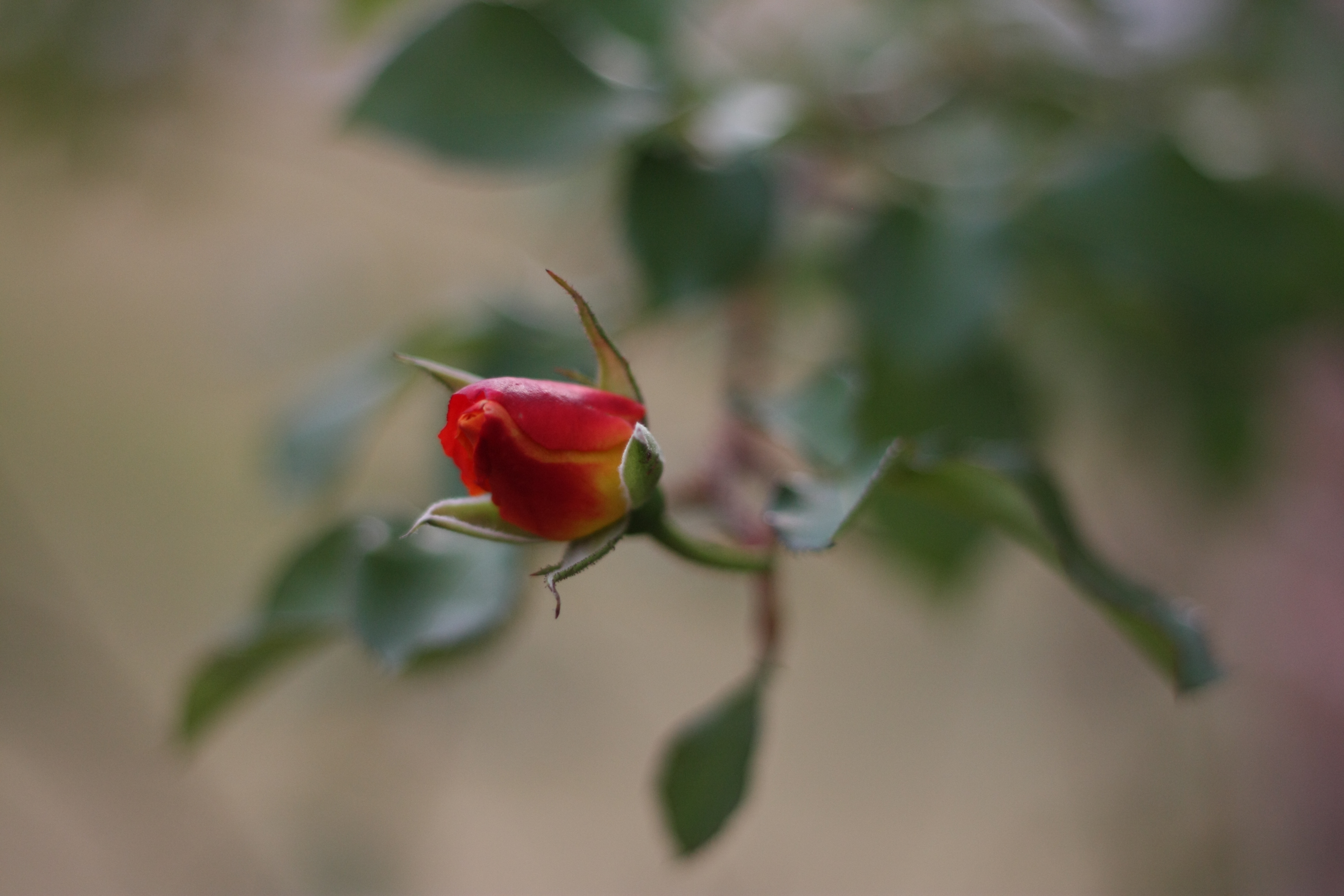
I photographed this little fella on a warm day last month, when the sun and the clouds fought for supremacy, and the autumn leaves waved brilliant colors to the wind. Surprise blooms from tenacious roses caught my eye. I grabbed the camera and contended with the wind and the ever-changing light.

This one looks like he’s smiling, a mischievous cross between a rose and the image that “snapdragon” conjures in my mind:

c2013, EE
c2013, EE

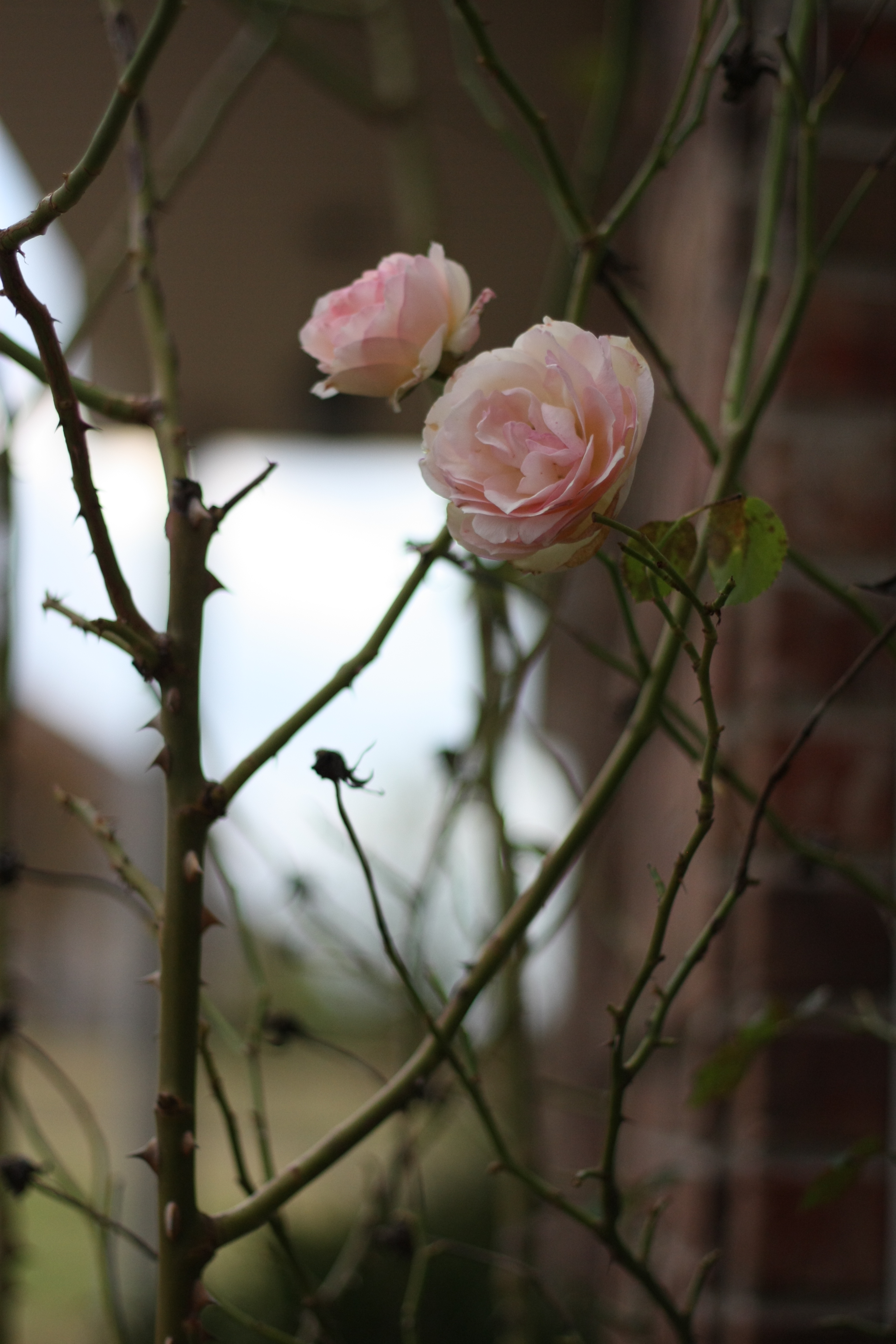
And more roses nearby, clinging to a brick wall then flying out of shot whenever the breeze wandered by — the precocious pink flirts:

c2013, EE
c2013, EE

Though no longer blooming, these cannes lily plants were sturdy, green, fresh, as if they grew in spring rather than in schizophrenic autumn, chill one day and summery the next:

c2013, EE
c2013, EE

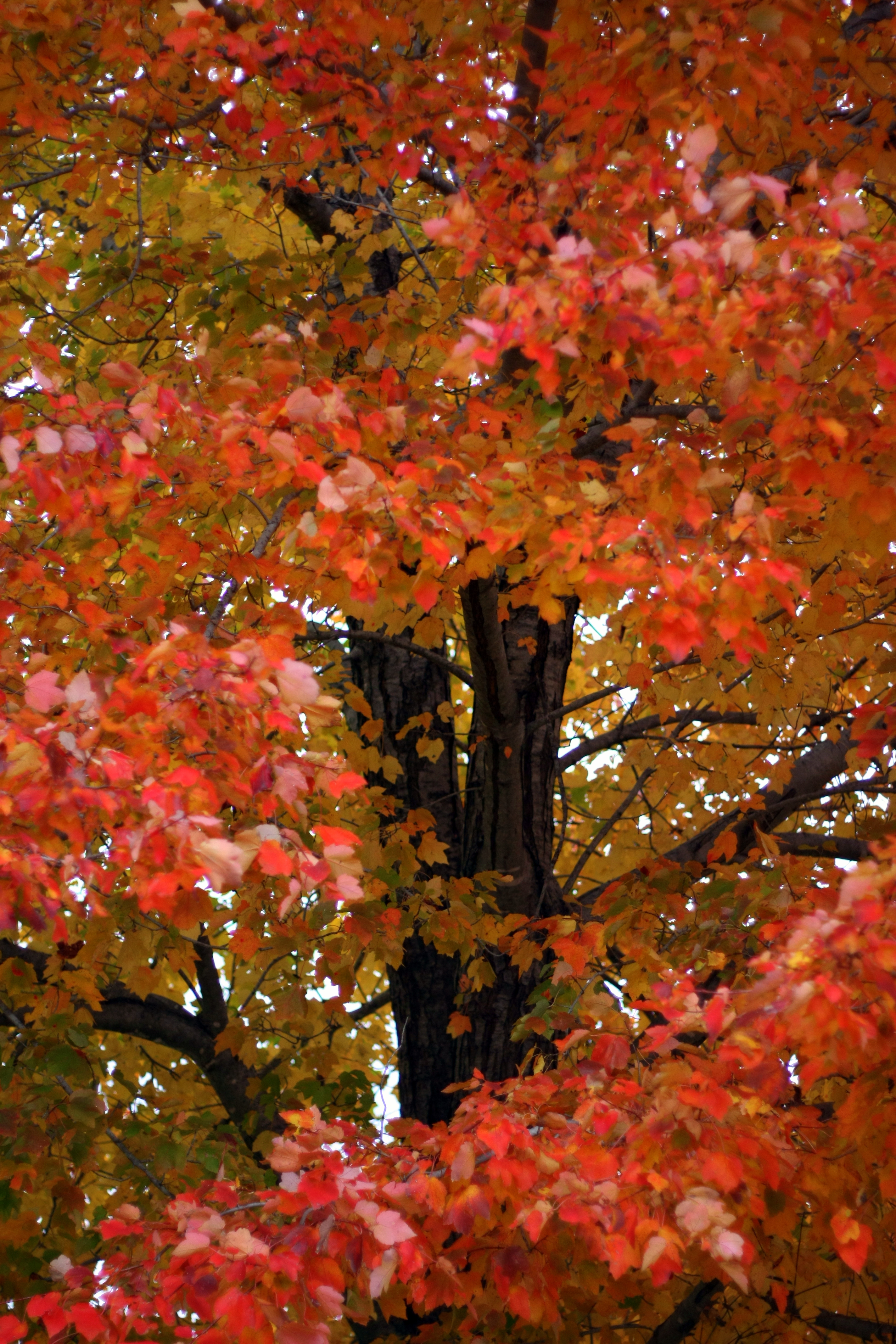
Maybe ten feet away from all this new life was this tree, covered in the vibrant colors of waning life:

c2013, EE
c2013, EE
c2013, EE
c2013, EE
c2013, EE
c2013, EE
c2013, EE
c2013, EE

The end is not necessarily the end. There are signposts of hope, if you know where to look:

c2013, EE
c2013, EE

Now that tree limbs are bare and flowerbeds barren, now that my life hasn’t turned out as planned and my writing is taking new directions, these pictures are reminders that not all death is tragedy, not all unwanted change is failure, and not every loss is cause for mourning.

 What’s Your Style?

24 Amy's lip gloss^vertical crop
Amy (c2010, EE)

I am not a fashionista.

My style would raise eyebrows on Fifth Avenue. Eyebrows lifted in amusement or shock, who knows? I like comfort. For shoes, I prefer Birkenstocks or Crocs, or a pair of lightweight Sketcher knockoffs made of sturdy, breathable material. For pants, capris (’cause I’m a weird height, smack between petite and average) or stretchy pants (’cause along with a weird height, I’m so oddly sized that I rarely find jeans that don’t turn me into a sausage or fall down to my knees). Shirts? Skirts? Again, comfort.

Comfort with my imperfect self, comfort with my imperfect appearance, and comfort with not fitting in to the crowd. My angsty, stressed, approval-driven teenage self wouldn’t recognize me now.

Neither would Rookie Writer Me, whose voluminous, pretentious prose painted many a page purple. Deep purple. Flamboyant purple.

Embarrassed-Blush Purple.

By comparison, Veteran Writer Me is almost Earnest Hemingway. The writing is concise, direct. It feels comfortable, like a pair of baggy pajama pants.

But I don’t wear those pj pants everywhere. Such a style is not universally appropriate.

Borrowed from a book review on Keanan Brand’s blog, Adventures in Fiction:

A note about style or voice: Neither of those elements should overwhelm the story. Style or voice should never become the star of the novel, but should serve the story. Therefore, when I say that no particular passage stands out due to style, that’s not a bad thing. I’d rather have substance than pretty, pretty lights.

The same could not be said of a particular fantasy novel I read a few years ago. Touted as lyrical and mesmerizing, the writing style was often so flowery — ahem, poetic — that my brain glazed and my eyes crossed. Although there were a couple of scenes where I paid close attention and read word-for-word, most of the novel passed in page-flipping disinterest. The style overtook the story.

Good writing will always be recognized, because it is smooth, refreshing, engaging, intriguing, a good vehicle for the story — but the best writing style doesn’t draw attention to itself. It doesn’t stand in the way of the story.

I’ve edited a spate of manuscripts plagued by sentence fragments. I love sentence fragments. In moderation. When they make a point. But always? For no apparent reason? Just to be trendy and “with it”? Not so much. (See what I did there?) Sentence fragments are great for indicating surprise, irony, humor, fear, but too many in succession can quickly grow wearisome.

An awkward writing style is a form of author intrusion. Ever read a book or an article that feels forced, not because the author doesn’t know his material, but because there’s a self-conscious attempt to be cute, hip, or literary? The author doesn’t feel comfortable, as if wearing an ill-fitting garment. No matter how luxurious the fabric or how fashionable the label, it looks cheap.

Play around with clothing styles to find your fashion sense, and play with different writing styles to find your creative groove. Get down inside it, turn around a few times, take a few steps to see how it fits. And then write, write, write.

For Independent (Self-Published) Authors

A fellow writer and blogger, Sandy Appleyard, asked this on LinkedIn, regarding independent (self-published) authors: “Has the bar been lowered?”

One person commented that the bar is easy “to reach if you’re the one holding it.” Indeed.

Appleyard expanded further on her blog:

This past summer, however, I started reviewing strictly indie authors, simply to help them out and to gain more perspective in the indie world.  In a nutshell, as an indie author myself, I have found book reviewing to be a very positive experience, and it has helped my writing career a lot.

What’s disappointing is the amount of less-than-great independently published books that I’ve stumbled upon recently.

Here is a short list of the issues I’ve seen:

-Grammatical/spelling

-lack dialogue

-too much back story

-not enough action

-un-relatable characters and/or story line

When I read these less-than-great stories, I feel like rather than reviewing them, I need to provide a beta read and an edit.  Are indie authors neglecting to take these vital steps?

Susan McBeth, founder of Adventures By The Book, responded with a concern about professionalism:

As an author events coordinator, I am frequently asked to host events for authors with self-published books. I am amazed when I read the books, how poorly edited many of them are (strictly speaking from the ones I’ve reviewed, not to judge all). I recently read a book that I would have considered for an event because the writing was very good, and the story was compelling an innovative, but I just couldn’t get past the fact that it didn’t appear to have been edited, and as a professional who prides my business with quality events, I want to ensure the product I am featuring is professional.

She’s right to be concerned. Not only is the author’s reputation at stake, but so is hers.

By the way, for writers living in or near Southern California, McBeth has begun The Author Academy, workshops to train authors in marketing. (I live a few states away. sigh)

My two cents’ worth:

I’m a freelance editor as well as an associate editor for a publisher, but I was a freelancer first, and have always set a high bar for my clients. Whether or not they choose to rise to meet it is entirely their choice. I do my best for them, and then they submit their work wherever they will.

As an editor for a publisher, though, the circumstances are different: A contract has been signed, and now I must help the author polish his work for public display. Still, I encounter authors who don’t seem to realize that, yes, there’s still work to be done. A contract doesn’t mean a pat on the head, all is well, the work is perfect, and all the editor has to do is fix a few commas and grammatical errors. No, there are often major story overhauls and dialogue fixes, et cetera.

Even then, authors dig in their heels, revert corrected sentences to their original incorrect state (dangling/misplaced modifiers are a huge problem), refuse to insert a necessary scene or do the proper research into an industry about which they know nothing, and so on. It can be right warlike, trying to edit the book of an entrenched, recalcitrant author who deems his work perfect and my work meddling.

On the other hand, there is real joy in editing a writer who has already done much of the work, and submits a manuscript with clean copy, good story pacing and flow, dialogue that contributes to the story rather than stagnates on the page, and has considered every word’s right to be there. That means the author is a self-editor, and knows how to be strict with his work, and is therefore able to take the advice of another editor.

And, yes, I’ve encountered many self-published books similar in state to the ones described in your blog, Sandy. I wish authors could take a few steps back, release their “babies” into someone else’s arms, and open their minds to honest feedback — before publication. Perhaps they don’t realize that those nagging misspellings or a saggy middle or the anti-climatic climax really are big problems. Readers won’t just overlook them, nor will they be likely to forget. The next time they encounter a book by an author who disappointed them, they’ll pass.

Independent authors, don’t be afraid of feedback. Welcome it.

Honest critiques by beta readers are worth more than money, and you don’t have to pay for them. Beta readers have an objective point of view that you, as the author, do not. They’ll help you find plot holes, flat dialogue, forgotten plot threads, weak scenes, and much more. Not only will they find problems, they’ll provide solutions.

Hire a freelance (independent) editor. Seriously. Save up the money, no matter how long it takes, and hire an editor skilled in editing your type of book (novel, memoir, reference, et cetera). Ask for references or editing samples, establish a good rapport, and let the editor have at your manuscript. Nothing beats a well-edited novel.

If one or more of your beta readers is also skilled at grammar, spelling, punctuation, and such, they’ll likely find and point out many nitpicky errors as they read. This is helpful, especially if it’ll be a while before you can afford to hire that editor.

Writing can be a lonely business. If you have no close support system — a writers group, for instance — several can be found online via an Internet search. I belong to a couple, but don’t use them as much as I thought I might. Actually, I’m on the hunt for a group in my town or in a nearby community, and have considered posting signs, seeing if any hidden writers will join me in starting a new group. Just as honest beta readers are priceless, so is a solid group of writers who can critique and encourage one another toward excellence.

Questions or comments? I’m happy to help where I may.

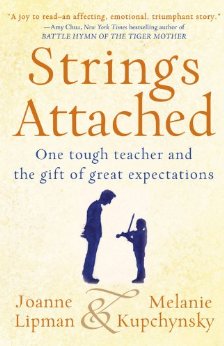
Strings Attached: One Tough Teacher and the Gift of Great Expectations

51ct7umFcIL._SY346_Strings Attached: One Tough Teacher and the Gift of Great Expectations is a memoir that reads like a coming-of-age novel about two young girls who meet while music students, then reconnect as adults when their former teacher’s younger daughter goes missing.

The authors, Joanne Lipman and Melanie Kupchynsky, are a journalist and a violinist, respectively, and Kupchynsky is the elder daughter of the aforementioned “one tough teacher”, and the sister of the missing young woman, Stephanie, who also grew up to become a music teacher.

I love music. I love singing, and plinking around on the piano or strumming a guitar, but I’m good at neither singing nor playing. The lessons I took as a child and a teenager were minimal, offered by kindhearted folks at church, or by persevering teachers at school. I was that student who thought she wanted to be better, but never had enough perseverance or patience to actually put for the effort to be better.

Writing and storytelling, however—those I did want to improve. Hours passed before I realized, especially if a writing session was going well, or if I was absorbed in studying or researching, or simply reading for entertainment. I didn’t need someone standing over me with a stern look, a stick, and an eye for the clock, because I was motivated all by myself.

But what happens when uncertain, shy, and even seemingly untalented students encounter a loud, particular, demanding teacher who is determined—by shout, by thwack, and by sparing praise—that they are going to succeed?

Mr. K’s subject, of course, was music. But the lessons he taught his students are universal: about resilience, and the power of optimism, and achieving success. And about humor, too, not that he was necessarily trying to be funny.

It’s hard to imagine a Mr. K in today’s world. Parents would be outraged; administrators would be pressured to fire him. Yet he was remarkably effective. His methods raise the big issues we grapple with now ourselves, as parents. Are we too soft on our kids? How do we best balance discipline with praise? How hard do we really want our kids’ teachers to push them? And if our kids do complain, how do we know when—or if—to interfere?

The latest research on kids and motivation, it turns out, comes down squarely in Mr. K’s corner. Recent studies show that overpraising kids makes them less confident and less motivated.

One study of fifth-graders—kids the same age as Mr. K’s beginning string students—is especially striking. Psychologist Carol Dweck and her colleagues divided the children into two groups and gave each a simple test. One group was then praised for being smart, and the other for effort. The result? The “smart” kids became far less confident, while the group praised for hard work became more confident, performed better, and in subsequent tests was eager to take on more challenging tests.

“The whole point of intelligence praise is to boost confidence and motivation, but both were gone in a flash,” Dweck noted… “If success meant they were smart, then struggling meant they were not.”

The concept that hard work trumps innate ability is at the core of current thinking about business success, too…

…(R)eal experts don’t want soft teachers: They want tough ones. Unsentimental ones. Ones who give them “painful” feedback.

We couldn’t imagine a more accurate description of Mr. K. (Foreward, xv-xvi)

Back in the 1970s and 80s, I was one of those kids praised for intelligence rather than effort, and came to equate difficulty with failure or stupidity. Or, horror of horrors, no talent.

…(T)o Mr. K, there was no such thing as an untalented kid—just a kid who didn’t work hard enough. You are going to fix this problem, he said when he diagnosed whatever was wrong, and there was never any question. Of course you would. It was just a matter of trying and trying and trying some more. He yelled, not because we’d never learn, but because he was absolutely certain that we would. (p83)

Joanne comes from a nice, middle-class family that Melanie envies, while Melanie grows up with an invalid mother and a driven father, who essentially becomes a single parent when his ailing wife can no longer live at home. She plays piano, and he violin, and he passes that skill to their daughters—whether they want to learn or not.

As for his school students, well, they adapt—sometimes humorously. Once, in his Ukrainian accent, he denounces the group’s “cheeken plocking”, and a rubber chicken flies from the back and lands at the podium.

One day, Joanne’s parents drag her to a recital. She’d rather go to the fair or read Harriet the Spy.

I yawned and fidgeted in my seat as the first few groups played, daydreaming about frozen custard and Ferris wheels. But I was jolted back to reality by a commotion on the stage. Mr. K was clomping across the floor—my, could he do anything without making a racket?—looking for something. I watched as he noisily dragged over a podium to the center of the stage.

(The) quartet drifted out from the wings: three teenage girls and Melanie, Mr. K’s daughter. Melanie was wearing a smock dress and shiny black shoes with ankle socks…Melanie’s red hair was even shorter than mine, and her jagged bangs looked the way mine did that time I got hold of my mother’s scissors and started snipping away… .

Melanie was tiny, so it was a good thing she had the podium to stand on. Hauling herself up the two big steps and positioning herself on the top of the box, she lifted her little violin with a theatrical flourish. The other violinists looked toward her expectantly. Michele, who so easily lorded her authority and wisdom over me at home, was gazing at this little girl with respect. She sure never looked at me that way. (pp 58-57)

Eventually, Joanne braves Mr. K’s furious methods, learns the viola, and joins the quartet, playing with Melanie and her sister, Stephanie, who plays the violin.

Melanie recalls a performance:

I can feel how nervous Steph is. She and Joanne play alone for the first few notes. Steph’s bow is wobbling. I suck in my breath and hold it, trying to will her to be calm.

…(M)y dad is right. We are ready, and after the first few measures we settle in to doing what we have done so many times before. The music flows. The audience seems to recede into its seats, and even my dad fades into the background. We stop thinking about the crowd and focus on the music and on one another. I only have to nod slightly, or glance up from the music to lock eyes for a millisecond with the other girls, and we all lean in to the music, or play softer or louder, or dig in to a passage together. We really are breathing together. We really do feel the music as if we share one brain…

When we get to the end of the piece, we all exhale at once. This is something none of us has experienced before, a secret bond that we’re sure nobody else can understand. The audience is cheering, but it barely matters to us…

When it’s all over, my dad hugs each one of us in turn. He plants a kiss on Stephanie’s cheek…”Go celebrate,” he says. “You earned it.” (pp98-9)

Praise from Mr. K is rare, subdued. When “Again!” and a thwack across misaligned fingers is common, a nod, a quiet “pretty good”, is enough. More than progress, it means a job well done.

When he chooses a difficult Brahms piece, Joanne wonders what he could possibly be thinking.

What made him think his orchestra was up to snuff to perform a piece better suited to college symphonies and the New York Philharmonic? (p103)

But she and her sisters gather their instruments and go to the practice room to warm up before the performance. The other quartet members are there, too, but scattered throughout the room as the orchestra struggles to play in time with one another.

“Quartet weel demonstrate proper way to play,” he announced. “Girls, you play.”

The hair on my arms stood up strait. My heart dropped to somewhere in my bowels…

The four of us timidly tried the passage. We were used to looking to Melanie to give us a nod to start, and then to each other as we played. But the other girls were nowhere in my line of sight. As we started to play, they sounded impossibly far away…The notes came out all wrong, the timing out of sync. My heartbeat sounded louder to me than my own playing.

Mr. K scowled. “Again!”

Tentatively, we tried it once more. I was so nervous that my bow skittered along the strings. Melanie sounded louder, more insistent this time, as she tried to lead…from the other side of the room. You could tell the rest of us were straining to follow.

“Again!”

I took a deep breath, mustered my courage, and attacked. This time, the four of us cut through the silence in the rehearsal room with a precision I had no idea I was capable of. Mr. K glanced at the high schoolers arrayed in front of him with a look of satisfaction. “Like that,” was all he said. (p104)

The orchestra wins competitions, as do individual musicians, and Mr. K is acknowledged as an effective instructor. He takes his students to nursing homes, and they play at events, even at the funeral of a classmate.

Generations pass. Those early students grow up and send their children to be taught by him.

Then, one busy work day at The Wall Street Journal, Joanne receives a call. Mr. K. His younger daughter, Stephanie, is missing.

She never misses lessons with her violin students. Where is she? Is she even alive?

How do her family, friends, former classmates deal with life with that terrible question hanging unresolved?

Her mother dies before it is answered. Now elderly and retired from teaching in public school, Mr. K remarries, moves down the street, gardens, teaches a few private students, and compiles a book of poetry written in Ukrainian.

Life moves on, only to be interrupted again, this time by the terrorist attacks of September 11, 2001. Then Mr. K dies.

Gathered to perform at his funeral, former students try to polish rusty skills while exchanging reminiscences.

Joanna:

Across the room I spotted my old classmate Ted Kesler, the boy whom Mr. K picked on so relentessly, who sat at the back of the first violin section. When I thought back to Mr. K at his toughest, Ted always came to mind. I could still see Mr. K forcing him to play alone—”Again! Again!”—while the rest of the kids in the orchestra watched. Ted was a college professor of education now. We greeted each other warmly, but I was puzzled. Why show up for a teacher who tortured him so?

“In some ways, Mr. K was a terrible match for me,” he readily conceded.

But then Ted told me something I didn’t know when we were kids. His mother had died when he was in grade school, before he moved to East Brunswick. His father was a Holocaust survivor who was raising for children on his own; other family members had perished in concentration camps. Mr. K showed his father a respect, a deference, that you didn’t see with the other parents. “Mr. K was hard on me in part because I was lost and aimless and unguided,” Ted said. “You know, he wanted more from me.” What’s more, “the orchestra kept me connected within a community,” he said. “It sustained me. All of those musicians in the group effort kept pushing me forward…That kept me going: the collaborative energy.” (p309)

Mr. K was a youth in Ukraine during World War II. He knew what Ted’s father had survived, and he knew what Ted could overcome.

On his way home one afternoon, he heard something that stopped him cold: the sound of a violin. He was transfixed. The music wafted through an open window and to the street below where he stood, motionless. Inside, a German soldier—one of the occupying forces—was practicing.

The music transported Jarema [Mr. K’s first name]. It took him away from the war, away from the death surrounding him, away from the uncertainty that was his future. It opened up, instead, a world infused with beauty. The music filled him with so much joy that it pushed out the darkness. Jarema yearned to play the instrument, too. It was a revelation, these melodies that lifted him up and chased the demons away. It was an escape. It sparked in him an almost spiritual belief in the power of music to heal.

“I want to learn the violin,” he told his mother.

“You will,” she said. “We will get you lessons.”

She was never able to deliver.

One day, the window was closed. There was no music. There never would be again. The soldier was gone; to another posting or to his death, Jarema would never know for sure. (pp256-7)

Ted was right. Mr. K understood better than anyone the bond music creates among people who play it together. Beyond his bluster—and behind his wicked sense of humor and taste for Black Russians—perhaps that was his lesson all along. (p310)

On sale October 1, 2013, Strings Attached: One Tough Teacher and the Gift of Great Expectations is a story of survival and understanding, perseverance and courage, and most of all love—love for music, love for country, love for a tough teacher who accepted nothing less than the best. It’s recommended reading, not just for teachers or musicians, but also for anyone from any career field or walk of life.

I finished reading this book several days before attempting a review, but the impact is such that, even now, I’m letting the book speak for itself. Although my copy is an ARC (advanced reader copy) with a paperback binding covered in quotes and information rather than the nice image of the final published copy, and although this ARC has spelling errors and missing punctuation, it will remain in my library. After all, just as Mr. K didn’t have the distinguished manner one associates with an orchestra conductor, this book may not have a pretty cover, but what matter is the music, not the face.