Category Archives: Writing

My writing process (by Suzan)

photo (19)Fellow writers and readers: grab a corner booth and sit down! My friend Keanan Brand, writer of epic fantasy, has challenged me to a reveal of my writing process. And I’ve accepted! My writing process is not a tidy one, it is “a poor thing, but mine own.” But if it gets the job done, it’s how I roll.

I’m using the Q and A framework posted by Keanan at Adventures in Fiction .

Q: What are you working on?

A: What I’m writing is a novel I never thought I would attempt. It’s a mystery thriller featuring a mentalist, a wager, and six people who are thrown into a situation filled with choices and a life-changing game. I don’t want to give away too much, that’s a very short summary.

I didn’t think I would write about mentalism or hypnosis, because my primary voice up to this point has been in horror and suspense fiction. However, once the idea was sparked, the book began to come alive.

I would also love to create a short comedy screenplay or novel about life in a retail setting.

Q: How does your work differ from others of its genre?

A: Tough question. Most thrillers tend to be all action, or a mix of action/cognition. My novel is more like the latter–it delves into the characters’ thoughts and motivations. And it mixes historical ideas with more modern ones: a nice dark blend of fact and fiction, interwoven into the plot. I’ve been told that not a lot of research has been done in some of the areas I want to explore in this book. So I’m searching out sources with care, and looking at similarities in research situations to draw ideas from.

Q: Why do you write what you do?

A: I’ve always been fascinated with the genres I mentioned above. But I wasn’t interested in magic or mentalism till last year. I saw a program which sparked my interest, even if I was sure I was looking at clever television production as well as true mentalist’s art. Actually, good film production IS like magic…but don’t let me get off the subject.

I write about people’s deepest thoughts and fears. I write about their hopes and dreams, and their journey. Because I have been through some of these things I write about, and have searched out the answers. Sometimes the question I asked was never answered. I write for the “inquiring brain” that enjoys adventure, questioning, and deep ideas.

Q: How does your writing process work?

A: For years, I was able to whip up short stories and articles at on a whim. Too bad I was not employed as a writer then! Today’s process–at least for the novel in progress–is a slower one.

I realized that I knew nothing about hypnotism when I began to write the first chapter of my novel. I blithely wrote down my impressions of a TV show I had seen. It looked so simple! Then I set off into the wilds of the Internet to find hypnotists to interview. I found, to my pleasant surprise, four interviewees who either performed stage mentalism or were hypnotherapists, and they went above and beyond to give me the best look at what this type of phenomenon really is. To my dismay, I had to re-write chapter one: all my “TV knowledge” was a sham.

Nothing beats talking to real people about their jobs. I’m extremely grateful to my interviewees!

After tallying up everyone’s views and experiences, I tried to use the basic ideas they held in common (and have probably favored some opinions over others).

So besides referring to my notebooks, I research in the directions I was pointed to. I write in chapter or half-chapter “chunks” and revise almost immediately. I write at least twice a week. As much as I’d like to hurry, I know that good work can’t be rushed. But I set deadlines for myself anyway!

I hope to independently publish my work in 2015 or 2016. I’m not sure if I will publish under this name or my real one. In any case, I’ll be sharing links to the work here.

Thanks for “sharing a booth” with me at this writer’s chat!

-post first published under Suzan’s pseudonym, Jade Smith

That Junior High Feeling

Below is a quote from Jenny Simmons, musician and writer, in her blog post The Christian Industrial Complex and Why I Am Doing a Kickstarter Campaignabout the obstacles facing us un-famous creative folk:

Regarding my book, The Road to Becoming, I’ve met with a handful of literary agents and Christian publishing houses. One executive told me I sent in the best book proposal he has seen in a long time. Another said my writing style was laugh-out-loud, contagiously authentic. One agent said “there is room for this story at the table” another said the book is “spiritually profound” and and another said “this book will be a close spiritual companion to many.”  But at the end of the day each publishing house or literary agent has ultimately said-

We love this book but you’re not popular enough right now for us to take a risk on you. 

One Christian publishing house even went as far as telling my manager that I don’t have enough “heat.”  When asked for a clarification the executive said, “Look, if she is a mega-church pastor, we will give her a deal. If you come back tomorrow and tell us she got picked up by a major women’s conference and has a major platform, we will give her a deal.”

It kind of feels like junior high all over again.
Popular. Platform. Heat.

I’ve known  that junior high feeling. Man times. But I’m breaking free.
For anyone who has ever encountered the same attitudes, or who’s just now trying to break into the writing biz, I recommend reading the entire article.

Letters

(c2013, EE)
(c2013, EE)

In my closet is a box of handwritten epistles inside envelopes. Yellowing envelopes from my late grandmother. Decorated envelopes from an artistic friend. Varicolored envelopes that contain holiday cards. Bulging envelopes holding old stories exchanged between friends. Sometimes I open the box and read the letters, and hear once more my grandmother’s voice.

There was a time I could neither read nor write enough letters. I waited impatiently for them. I scribbled them when something unexpected happened, or when my friends wouldn’t write fast enough.

Along came instant messaging, internet chat rooms, e-mail, and communication flew between us. I reveled in the instant exchange of news and ideas.

But the charm faded. I couldn’t get away from people. There were questions demanding immediate answers. Friends or colleagues  planning events or meetings, often last-minute. My digital inbox expanded. An accusing mouse pointer or blinking cursor prodded me to drop everything and communicate. Now.

That pushiness is one reason I’ve never owned a cell phone. When I owned a landline, there were days I’d let the answering machine catch calls. A wielder of words, I had nothing to say.

As years passed, as career shifted, I’ve relaxed communications. A message may sit in the e-mail box for a few days before I compose a response. Although most messages I receive are the digital equivalent of casual scrawls, even from my colleagues in the professional realm, I tend to write as if each message is a letter. There are paragraphs, proper sentence structure, no text-speak. There is still courtesy.

A few days ago, engaged in spring cleaning, I found odds-and-ends of stationery. The paper is excellent, and the feel of its thick texture against my fingertips renders me nostalgic. Some of it is printed with designs at the bottom or along one edge, leftovers from my adolescence or from someone’s humorous birthday gift a decade or more ago. Some paper is still attached to a gum-adhesive strip at the top, keeping the leaves together, and much is loose-leaf, stacks of pale parchment waiting careful calligraphy.

How impatient will friends and acquaintances be if their e-mail receives reply by post?

Or will they look on the envelopes in puzzlement?

I wonder.

This Book, Right Now

It’s an epic, never-ending battle between mind and emotions: Who cares? Who’s gonna read this? Is it a story worth telling? Well, dagnabbit, I’m a wordsmith; of course it’s good! No, no, it’s utter garbage.

Doesn’t matter how many books you’ve written — none or dozens.

Doesn’t matter how many reviews you’ve gained — none or hundreds.

Doesn’t matter how many books you’ve sold — none or millions.

It’s all about the book in front of you.

What I’m about to write may seem to contradict what I wrote in Mentors v. Gatekeepers, which is about finding mentors to teach us, and breaking free of the gatekeepers who might try to keep our stories from reaching the world.

However, as much as I am a dreamer, I’m also a realist. No writer is perfect. We all need an objective eye. That perspective can come from a critique partner, a writers group, an agent, an editor. We need that honest person who’ll say, “I understand you’re trying to make us feel the wind, but this sentence crashes to ground.”

We might, on occasion, pen a short story or a poem that needs minimal revising, or none. Sometimes we’ll write a scene or a chapter that is barely edited, if it’s edited at all, because it’s good from the beginning. However, those rare glimpses of perfection should not be mistaken for signs that we have nothing more to learn.

Sure, you might win contests, awards, accolades, admiration, celebrity, financial success.

Sure, you might publish a string of bestsellers.

Sure, you could kick back and rest on the smug knowledge that you have written, and written well.

But all that falls away in the presence of the book you’re writing now.

This book, right now.

Will you dash it off, not spending the same time and care as you might have done when you were green and uncertain? When you were hungry?

Or will you be even more precise with your choices, your efforts, knowing that you owe your readers your best, although readers owe you nothing?

Until recently, I edited manuscripts for a publisher. It was challenging and educational, and far less glamorous and lucrative than some might expect. Many manuscripts should never have been given contracts, because either the stories or the writing weren’t ready for publication, and read more like works in progress rather than final drafts. But there were many that only needed a scene rewrite here or there, dialogue revisions, minor proofing, or expanded endings.*

The point is this: every manuscript needed an editor.
bookstore entrance (c2011, KB)
bookstore entrance
(c2011, KB)

However, one major reason I am no longer working for the publisher is the notion that some writers are perfect, their work approaching the sanctity of Holy Writ. I was given the resumes and bios of certain writers, not merely to inform me of their background, but to tell me — without the actual words being said — Here There Be Untouchables. I was expected to do my job so lightly that egos were stroked without being ruffled.

Anyone who knows me also knows I am not an ego-stroker. I give praise and encouragement, but I will not flatter. Flattery stresses me. Flattery makes my insides curl up like frightened potato bugs.

So does letting a problem fester and lie there without being addressed. I hate confrontation, but dealing with a problem is necessary. It’s like feng shui for the soul.

After the latest round of flatter-don’t-edit, I turned in my resignation. (Read more about it here: “When It’s Time To Go“.)

Just as writers aren’t perfect, neither are editors. I’ve made my share of mistakes. I’ve been the pompous youngster who thought he knew far more than he actually did. Memories of past stupidities still make me shudder.

And I’m a writer, too, so there are even more past mistakes to make me want to hide under a blanket until everyone forgets I’m an idiot.

Pride and insecurity are two fires that fuel writerly angst and sensitivity. Pride stings when someone pokes, stabs, or slaps it. Pride doesn’t like it when someone says, “That scene doesn’t work” or “This chapter is boring.” Pride wants to cross its arms and ignore the negative feedback, or even to draw a verbal sword and attack the critic.

I know. I battled stung pride a couple days ago, wanting to stab back at a reader whose own arrogance overshadowed his advice.

But I’ve been here before. I’ve learned to sift through the feedback, take what I need, discard the rest.

I can’t pull out my past awards, my references, all the contest certificates or publishing credits. They’re nice on a resume, but they don’t have any bearing on the book in front of me.

Like every other writer, all I can do is my best on this book, right now.


* One disservice, I believe, television and movies have done to modern fiction is the rush to an ending. Back when The Lord of the Rings film trilogy was finally complete, and The Return of the King came to theatres, some viewers complained about the long ending. Those viewers had likely never read the book, in which essential story continued past the main battle. The conflict wasn’t over, and there was still an enemy or two to deal with. But that’s like real life, eh? There’s always something.


Whaddya Think? (Using Internal Dialogue to Enhance Character)

220px-Ladyhawke_ver1One of my favorite characters in film or literature is The Mouse from 1980s film Ladyhawke. A youthful thief of slender dimensions, Mouse makes promises to God then promptly breaks them, and though his faith is undimmed, his skepticism remains sharp.

“Lord, I’ll never pick another pocket again as long as I live. I swear it. But here’s the problem: You’ve got to let me live. How can I prove my good faith to you? If you’ve heard me, this ledge will remain steady as a rock, and that thing coming at me won’t be what I think it is. If it is, there’s no hard feelings, of course, but I’d be very disappointed.”

Later:

“We have come full circle, Lord. I would like to think there is some higher meaning in this. It certainly would reflect well on You.”

At the beginning of the film, when he’s escaping from the dungeon via a passage so small it should have been impossible:

“This is not unlike escaping my mother’s womb. God, what a memory.”

Fearful yet courageous, uncertain yet bold, seeking company yet often alone, he verbalizes his internal dialogue to humorous, insightful effect. Without Mouse’s spoken thoughts, the story would be less. It would be flat, too earnest, maybe even pretentious. But Mouse and his constant patter bring heart, humor, and that disbelieving look askance that somehow makes us believe it even more.

Granted, most internal dialogue is internal — that’s the point. It’s a character’s unspoken thoughts that readers are allowed to know, whether or not those thoughts are ever revealed to other characters in the story.

It can take many forms, from prayers to wishes, from snarky comments or ironic remarks, from telling the truth to outright lies, even conversations with people who aren’t there. In the passage below — from an episode in Keanan Brand‘s science fiction serial, Thieves’ Honor, there’s spoken dialogue between mercenary Bosko and prisoner Finney, but internal dialogue between Finney and her deceased grandfather, Admiral Cunningham. [Note: The Admiral calls her “Gracie” because that’s what he called her father, whose last name was “Grace”.  Father-in-law good-naturedly harassing his son-in-law. Both men are deceased before the story begins.]

“Like I said, you’re an uncommon target.” He chuckled again. “A great many governors and officials didn’t seem too eager to help us find you. Lotta lowlifes, too. Figured they’d been paid off—or they do business with the Vega. Name’s Bosko, by the way.”

“We’re not friends.”

“No reason we can’t talk.”

Ye don’t like talking, Gracie, do ye? Except to that crew and its captain. The admiral’s voice held a slight harrumph. Pilot on a reputable ship might make a grandda proud, but on a pirate vessel?

Fewer rules, she replied. No uniforms. No salutes. No blasted colonial government.

Ach, Gracie, now yer talkin’ like a rebel.

Aye, Grandfather, and were I braver I’d have joined them years ago, but it’s safer in the supply line.

There was a snort. Safer? And with supplies stolen from honest citizens! Then the imagined voice gentled. Not always so honest, I suppose. Still, the goods are not yers for the taking. Look where piracy has brought ye.

Not piracy. She looked down, and wrapped one blood-crusted hand around the collar. Murder. Vengeance for you. Tears slipped from the corners of her eyes and dripped from her chin. I acted in haste, and the wrong person died.

“No tears now”—Bosko sounded nervous—”and no pulling at that collar.” (from Episode 15, “Leaping the Circle, copyright KB)

Done well, internal dialogue adds tang to the story, expands the readers’ understanding of or connection to a character, and reveals that character’s philosophy, belief, opinion, etcetera. It can liven the spoken dialogue and even liven a character.

On the other hand, wielded clumsily, it can kill a character.

This was evidenced in a manuscript I recently edited. The author was concerned about feedback from beta readers who said they didn’t connect with her main character. In fact, they didn’t like her. She was cold, arrogant, unsympathetic. After I provided a detailed critique, the author made changes, but she was still concerned about the readers’ perception of the main character.

Due to various behind-scenes-matters that attend the publishing process, I didn’t read the manuscript again for a few weeks. However, when I dove in again, I saw the problem: The character’s snarky, blame-casting internal dialogue made her seem whiny and belligerent rather than realistic and confident. By trying too hard to make her seem hip or smart, the author actually undercut the character.*

“Children should be seen and not heard,” or so goes the old saying. I disagree with its intent of marginalizing children, but there’s truth in it, too. Or, to quote other old sayings, “actions speak louder than words” and “a picture’s word a thousand words.”

“Think before you speak.”

Or, in the case of an author wondering whether or not to reveal a character’s thoughts, “think before you write.”

Be aware of what is being revealed in dialogue. Is it what you intend? Will it enhance or undercut the character? Will it contradict everything else we know about the character? Will it add just the right amount of spice, or will it leave a bad taste in the reader’s mouth? Will it make an unlikeable character seem nicer than you intend, or make a sympathetic character lose the reader’s respect?

Internal dialogue can also add subtext and subtlety to a story. Subtext is what is meant but never actually written or said, and subtlety is the use of the indirect or the obscure in order to reveal what isn’t obvious. Subtlety could also be defined as cleverness or perception.

Do your characters make oblique observations that, on the surface, are about something mundane but reveal what the characters are really feeling? Or, perhaps, we know exactly what they’re thinking, but something else is engaged in the dialogue, too. In the example below from a soon-to-be-published fantasy novel, nature — or God? — seems to be responding to the character’s unspoken questions:

There was another place for the fallen, for the murdered and the war dead. They were said to cry in eternal grief and bitterness, trapped on the Highlands, separated from kindred until a blue sun rose in the west. Their howls, Turi suspected, were nothing more than wind through stones, but even he would go no closer to the Highlands than the wood. After all, what defense was a sword against a spirit?

He tilted back his head and looked up at the ribboned sky. Omwendinn?

A sudden breeze set banners waving, snapping the green Oak of Disson in a brisk salute.

When will those distant fires be the fires of home?

The breeze died. The first stars of evening winked in the sky. (Dragon’s Rook, copyright 2014, Keanan Brand)

There are many ways to employ internal dialogue. Play with it. Experiment. See what works. Does it make you laugh? Gasp with surprise? Nod your head and say, “Aha!”

If so, well done.

Or, as the admiral might say, “Carry on, Gracie. Carry on.”

* This book will be published in late 2014, and I do not have permission to share examples from the text.

The Purpose of Fantasy

ThePurposeofFantasyThis is a good book.

I could end my review right there and still have told the complete truth, but that wouldn’t tell you why or what, or how you can acquire your own copy of this useful, soon-to-be essential, little volume.

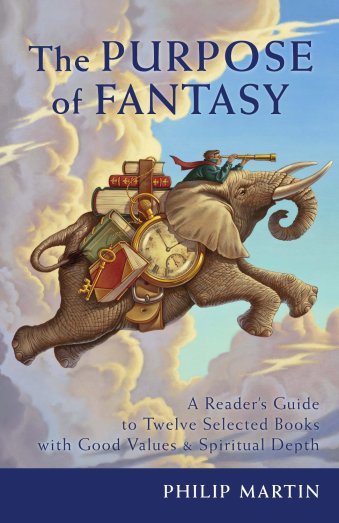
The WHAT and the WHO: The Purpose of Fantasy: A Reader’s Guide to Twelve Selected Books with Good Values & Spiritual Depth by Philip Martin. I met Phil many years ago at a writing conference in Oklahoma City, back when he still worked as the acquisitions editor for The Writer Books. He’d recently published the first edition of A Guide to Fantasy Literature (now revised and with a new cover, although I much prefer the dragon on my copy!). Since then, he has formed his own publishing house, as well as offering consulting and mentoring services for fellow writers.

The WHY:

As a writer of fantasy and science fiction, I have defended my chosen genres to writers who deem them lower forms of literature, as pop-lit or pulp fiction. (Well, I ask, doesn’t the “pop” in pop-lit mean the form is popular? There must be a reason for that.) Fantasy has been and will always be a viable and powerful literary form, and Philip Martin is its apologist:

Fantasy is different from other types of fiction. It is a wonderful approach to storytelling, and “wonderful” here means literally full of wonder. Unfortunately, it is often used in a very small-minded sense to segregate off a small type of adventure fantasy into a sub-genre, a ghetto of bookstores and libraries, where you mostly find books with sword-wielding barbarians, bushy-eyebrowed wizards wearing star-studded gowns, Arthurian knights galloping across medieval countrysides, perhaps a castle in the background, perhaps a scaly dragon sailing overhead, perhaps a warty, axe-wielding ogre lurking in the shrubbery. But fantasy is far more than this. Fantasy combines wonder and whimsy with a richly non-rational, spiritual, philosophical look at matters such as good and evil…Someone said that the difficult thing about fiction is that it has to make sense. Fantasy makes sense, but it doesn’t show us reality. It shows us an inner truth, without any need to be any more real than an occasionally invisible hobbit with hairy toes. (Kindle locations 134-150) (emphasis mine)

Martin goes on to say, “At their core, fantasy stories are about what we believe about some matter of spiritual beliefs; they tackle core issues of good and evil, and how we should deal with it all” (Kindle locations 155-156).

Amen, brother! Preach it!

But this is not a religious book, nor is it a book of faith, but a discussion of how the spiritual is illustrated by and becomes accessible because of fantasy literature.

The HOW:

His three criteria for choosing the twelve books included in The Purpose of Fantasy:

  1. They had to be really entertaining.
  2. They had to be worth rereading.
  3. They had to be worth discussing.

As a result, and without prior design, most of the books that made the cut are generally marketed to children.

C.S. Lewis wrote: “When I became a man, I put away childish things, including the fear of childishness and the desire to be very grown up.” Albert Einstein said, “If you want your children to be intelligent, read them fairy tales. If you want them to be more intelligent, read them more fairy tales.” (This may apply to adults as well.) What is clear is that the foundations of a person’s moral character are strongly shaped by influences and lessons absorbed in childhood. And the two things that fantasy is most about – imagination and issues of right/ wrong – are naturally in rich abundance in children’s books and stories. (Kindle locations 234-240)

However, the questions raised and the themes throughout are decidedly the realm of adults.

Some writers of fantasy have been quite annoyed to see their stories labeled as “for children.” These authors included the great fabulist Hans Christian Andersen, who insisted “my tales were just as much for older people as for children, who only understood the outer trappings and did not comprehend and take in the whole work until they were mature.” (Kindle locations 274-276)

Again, the WHAT (the books Martin discusses in The Purpose of Fantasy):

Momo by Michael Ende
Tuck Everlasting by Natalie Babbitt
The Little Prince by Antoine de Saint-Exupéry
The Silver Chair by C.S. Lewis
Finn Family Moomintroll by Tove Jansson
The Rope Trick by Lloyd Alexander
Gifts by Ursula K. Le Guin
The Last Unicorn by Peter S. Beagle
The Wind in the Willows by Kenneth Grahame
Charlotte’s Web by E.B. White
The Ocean at the End of the Lane by Neil Gaiman
The 13 Clocks by James Thurber

Reading this book was a joy. It reacquainted me with beloved books I haven’t read since childhood, and nudged me to become friends with books that have long been on my “to read” list. (I first learned of Momo from a popular South Korean television series, My Lovely Sam Soon, aka My Name is Kim Sam-Soon, and have been wanting to read it ever since.)

For me, there is a danger in reading interesting books that are also well-written. When I find something I like, something that speaks to me or draws me in, I will blitz through it. I skip across the water rather than immersing in it. This time, however, I read slowly, as Martin recommends we do when perusing the stories he suggests. Savor them, ponder them, ask their questions of ourselves. Feel the wonder.

Fantasy’s gift is to allow us to see our own world in a state of surprise and grace. (Kindle locations 475-476)

Or, as Antoine de Saint-Exupéry writes in The Little Prince,

“It is only with the heart that one can see rightly; what is essential is invisible to the eye.”

But fantasy is more than the fantastic or the spiritual. In the chapter titled “Is Fantasy Subversive?”, Martin opens with this statement:

 Some authors have seen fantasy as a good way to introduce a type of creative questioning, one that can shake up, or sneak by, a conventional perception. (Kindle locations 492-493)

And bolsters it with this:

Ursula Le Guin wrote that some adults are uneasy with fantasy’s inconvenient tendency to reveal truths – to tell stories in which emperors have no clothes. (Kindle locations 504-505)

I grew up in a strict church that, despite its words, seemed more concerned with appearances than with truth, and eschewed obvious sins while indulging in the more subtle, more insidious sin of pride. I was that kid who stirred up controversy by pointing out what was, to me, as plain as sunshine: There’s something wrong. There’s a disconnect between what they said they believed and how they behaved.

One of the teachings declared that most fiction was useless and even sinful, because it was lies. However, as a voracious reader, I consumed fantasy, science fiction, historical fiction, mysteries, fairy tales, folklore, and the like, as well as the many stories in the Bible, and gained much from them all. In a Native American folktale, I might learn about wise choices, which backed up a concept I might have learned in Sunday School or heard preached from the pulpit. In an African fable, the evil of lying might be reinforced.

Martin asks,

Do stories question authority? How often, for instance, do stories and books for young readers contain dunder-headed or threatening adults? Does that mean that those stories are anti-adult? More accurately, they encourage young readers to think twice, and compare what they see in real life to those fictional tales. (Kindle locations 576-578)

It’s not important which church I grew up in, or what I observed. It’s important that I read widely and asked the questions. Eventually, I came to see value in much of what I was taught, because it was true and solid and a good guide for life. However, there is also much I abandoned as untrue and harmful.

For a time when I was in elementary school and junior high, there was a fear among the adults who knew me that I would mix up reality and fantasy, that the fiction that so enthused me would overtake my reason or my faith. When I wearied of defending myself and the books, I hid them behind more acceptable volumes, read them under the covers, sat in secluded corners.

The key to opening the mind is to be able to imagine something else, to ask “what if.” But “what if” does not answer questions. It simply creates a portal, an opening to build the structure of a story on top of those questions…Minds of young readers are not so malleable or gullible that they swallow everything they read or are toldFantasy stories raise the question of Truth. But they don’t create it, and readers know that, because the worlds of fantasy are so clearly invented. Even more so than all the other branches of fiction, they are impossible worlds. (Kindle Locations 587-603) (emphasis mine)

It seems I cannot write a book review without applying it to my own life. That’s a good thing, perhaps, because it shows how well the book relates to me. Is it true? Interesting? Vital? Engaging? Well-written? The Purpose of Fantasy is all those and more. I recommend this book to writers and readers everywhere, especially those who see the wonder beyond the skin of the world.

Martin concludes the “Is Fantasy Subvervise?” chapter thus:

The solution, in a fantasy book, often comes from the smallest one who asks the biggest questions. (Kindle locations 608-609)

What’s your question?

*  ~  *  ~  *  ~  *

In addition to being an excellent and engaging writer, Martin is also an editor, mentor, and publisher. He’s the founder of Great Lakes Literary and its two imprints, Crickhollow Books and Crispin Books. Martin is blogging about the books he explores in The Purpose of Fantasy ( Mary Poppins, for instance), and readers are invited to join the conversation. Readers can also visit the Crickhollow Books page on Facebook.

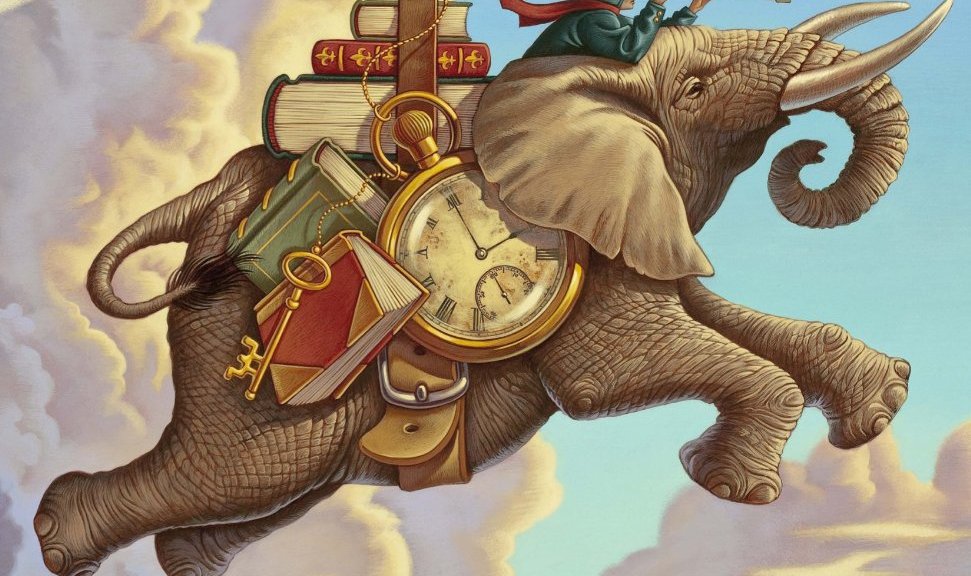
One last note: Check out that awesome cover art! It’s called “Looking for a Good Book” and is by Greg Newbold. You can check out more of his work on his site.

Cold Heart, Kindly Meant

In recent months, I’ve been approached by new writers seeking to self-publish their work, and have participated in a few discussions about and with independent authors. As a result, I’ve come to this conclusion: Regardless of literary skill or monetary remuneration, one’s self-discipline and willingness to keep learning are important to one’s success. (And one’s definition of success is important, as well.)

Some of the authors I’ve met understood their manuscripts’ need for good editing, but have wanted it at little or no expense. I understand that. I’d love to obtain excellent products at no cost to me. Free housing, free utilities, free whatever — that’d be great, huh?

But we appreciate and cherish that which we gained at great cost, that for which we sacrificed.

So, despite how cold-hearted these words may seem to new writers in search of praise and handouts, I say, “Suck it up. Work it out. Learn. Strive. Improve. Don’t whine. Grow up. Bind your wounds. Stand on your own feet. Know when to ask for help. Keep fighting. Know your worth. Be humble. And in the words of Bill and Ted, be excellent.”

Cold Spell ("I'll get you, my pretties!") c2013, EE
Cold Spell (“I’ll get you, my pretties!”)
c2013, EE

Two-Timer

It’s not jet lag but NaNo lag–that draggy, lazy feeling after completing the flat-out run of National Novel Writing Month.

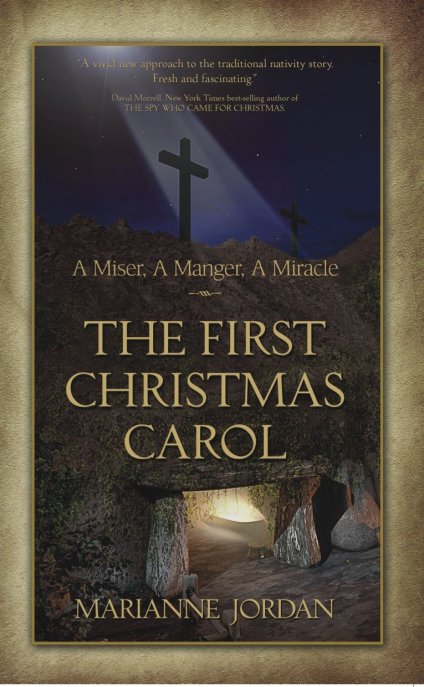
71tOzSj59eL._SL1241_Aside from final edits to Marianne Jordan’s first novel, The First Christmas Carol: A Miser, a Manger, a Miracle, I set aside all editing tasks for the month of November, and wrote. Just wrote.

Oh, the luxury!

And the agony.

I’ve been a stranger to my novels, so becoming reacquainted with them was awkward and stilted. Ideas were pulled along rather than being willing participants; it’s as if they were rusty gears that had to be oiled and finessed until the teeth caught and the wheels turned. And when they started, wow, did they run!

So, now it’s December, and a freelance project is waiting for my editing expertise, but I’ve had an epiphany of sorts. It’s one of those it’s-so-simple-and-obvious-how-did-I-miss-it epiphanies: I tend toward all-or-nothing when I work, but that’s bad for my writing, and bad for my peace of mind. So, simple fix: Edit only two or three hours per day, then write.

That may seem counter-productive, but it might curb frustration and stress, which will lead to greater productivity.

Gonna try it this month.

Gonna hold hands with my novels, maintaining relationship and finally reaching the end, while still doing my job as an editor helping other writers achieve their publishing goals.

Yep. I’m gonna two-time.


(Note, 12/12/13: Nine days later, it’s still working.)

Matthew, Mark, Luke — and Dickens?

What if the innkeeper in Bethlehem had been named Ebenezer?

What if, like his Dickensian counterpart, he was a miser?

What if he met the Holy Family and turned them away — not because there was no room at the inn, but because the price of the room was too high for Joseph to pay?

71tOzSj59eL._SL1241_

The First Christmas Carol: A Miser, a Manger, a Miracle by Marianne Jordan is a brief, powerful book combining classic elements of A Christmas Carol with the Biblical account of the Nativity to form a fresh-yet-familiar story.

Ebenezer turned and stepped through the doorway, his elbow brushing against the mezuzah hanging on the frame. Like the one at his home, it had been a fixture of the inn since its construction.And like the one in his home, the mezuzah was severely cracked and chipped. It was amazing it remained attached at all. Ebenezer refused to fix either. To repair them would have been an unnecessary expense.

Most Jews who came through the door automatically reached to kiss the small scripture casing, only to find pieces crumble in their hands. Ebenezer had all but forgotten it was even there, but now the disintegrating symbol caught his attention.The small indentation appeared to be the image of a woman’s face.

Was that—? No, it couldn’t be.

He squeezed his eyes and shook his head, slinging drops of sweat around him. When he looked again, the silhouette had disappeared. He tilted closer, running his fingers over the fissures. Impossible.

Ebenezer’s old partner, Jacob, is dead, but that just means more money for Eb. He’s reveling in the census, because that means more travelers coming to his inn. He ratchets up the prices. Who’ll complain? It’s not like they have a choice.

Just as Scrooge was visited by three ghosts sent by Jacob Marley, the innkeeper is visited by three angels announced by Gabriel. And, just as Scrooge was forever changed by revisiting his past, experiencing otherwise unknown aspects of his present, and seeing his future if he doesn’t alter his ways, so too is Ebenezer powerfully affected by similar journeys to different moments in his life.

He is especially unsettled by his encounters with a young teacher — the man that the infant being born in his stable becomes.

As the rabbi turned to resume his walk, he looked at Ebenezer. It happened every time the innkeeper was in the man’s presence. Ebenezer shivered. Could the man see him? There were even times when Ebenezer thought the teacher was speaking specifically to him.

“The more lowly your service to others, the greater you are. To be the greatest, be a servant. Those who think themselves great shall be disappointed and humbled, and those who humble themselves shall be exalted.”

Ebenezer and the silent angel of the future follow the rabbi all the way to his crucifixion. Ebenezer sees the empty tomb, but instead of gaining hope, he despairs, broken by deep realization of his unworthiness.

He is returned to the present, and goes to the stable in time to join the shepherds and others gathered there to worship the infant Savior. Hope returns, and the innkeeper will never be the same.

His heart is not the only one that needs opening. Interwoven with Ebenezer’s story is that of his assistant, Aaron, who is also changed the fateful night he and his family helps Joseph find lodging and Mary give birth.

Full disclosure: I edited this book. From the moment is was assigned to me, I was intrigued by the premise, and enjoyed watching this book change and tighten and gain power. I believe that reading The First Christmas Carol alongside the Book of Luke would make an excellent addition to family Christmas traditions, and I will be adding this book to my personal library.

The First Christmas Carol is available as an e-book (Kindle) and in paperback.

BONUS: Enter to win a Kindle Fire!

 What’s Your Style?

24 Amy's lip gloss^vertical crop
Amy (c2010, EE)

I am not a fashionista.

My style would raise eyebrows on Fifth Avenue. Eyebrows lifted in amusement or shock, who knows? I like comfort. For shoes, I prefer Birkenstocks or Crocs, or a pair of lightweight Sketcher knockoffs made of sturdy, breathable material. For pants, capris (’cause I’m a weird height, smack between petite and average) or stretchy pants (’cause along with a weird height, I’m so oddly sized that I rarely find jeans that don’t turn me into a sausage or fall down to my knees). Shirts? Skirts? Again, comfort.

Comfort with my imperfect self, comfort with my imperfect appearance, and comfort with not fitting in to the crowd. My angsty, stressed, approval-driven teenage self wouldn’t recognize me now.

Neither would Rookie Writer Me, whose voluminous, pretentious prose painted many a page purple. Deep purple. Flamboyant purple.

Embarrassed-Blush Purple.

By comparison, Veteran Writer Me is almost Earnest Hemingway. The writing is concise, direct. It feels comfortable, like a pair of baggy pajama pants.

But I don’t wear those pj pants everywhere. Such a style is not universally appropriate.

Borrowed from a book review on Keanan Brand’s blog, Adventures in Fiction:

A note about style or voice: Neither of those elements should overwhelm the story. Style or voice should never become the star of the novel, but should serve the story. Therefore, when I say that no particular passage stands out due to style, that’s not a bad thing. I’d rather have substance than pretty, pretty lights.

The same could not be said of a particular fantasy novel I read a few years ago. Touted as lyrical and mesmerizing, the writing style was often so flowery — ahem, poetic — that my brain glazed and my eyes crossed. Although there were a couple of scenes where I paid close attention and read word-for-word, most of the novel passed in page-flipping disinterest. The style overtook the story.

Good writing will always be recognized, because it is smooth, refreshing, engaging, intriguing, a good vehicle for the story — but the best writing style doesn’t draw attention to itself. It doesn’t stand in the way of the story.

I’ve edited a spate of manuscripts plagued by sentence fragments. I love sentence fragments. In moderation. When they make a point. But always? For no apparent reason? Just to be trendy and “with it”? Not so much. (See what I did there?) Sentence fragments are great for indicating surprise, irony, humor, fear, but too many in succession can quickly grow wearisome.

An awkward writing style is a form of author intrusion. Ever read a book or an article that feels forced, not because the author doesn’t know his material, but because there’s a self-conscious attempt to be cute, hip, or literary? The author doesn’t feel comfortable, as if wearing an ill-fitting garment. No matter how luxurious the fabric or how fashionable the label, it looks cheap.

Play around with clothing styles to find your fashion sense, and play with different writing styles to find your creative groove. Get down inside it, turn around a few times, take a few steps to see how it fits. And then write, write, write.