No, I’m not going to dive into a point-of-view lecture (I’ve done that too many times, and have borrowed from the lectures of others).
Yes, point of view is eminently important in shaping a story, lending it tone, flavor, expression.
What about perspective? How does the mountain look from your hero’s point of view? From the villain’s? From the guy on the street’s? From the guy who lives in a yurt at the top?
EE, a walk at sunset in April, c2013
This photo makes the water tower appear small and the tiny barbecue grill seem greater.
We know that’s just a trick of the eye, made so by where we stand.
How do your characters view their world?
How do those perspectives conflict, mesh, create new perspectives?
I’m a Jane Austen fan, ever since I read Sense and Sensibility and Pride and Prejudice as a young teenager, and giggled at the subtle, gentle humor of those comedies of manners. Before opening the books, I was warned they might be difficult to understand for readers used to being spoon-fed ideas, so I’d best pay attention.
I did. And I loved them.
Then, in my twenties, I encountered Persuasion, and my first attempt at reading it ended after the first chapter or so: too many commas, as if Austen had found them on sale at a punctuation store, and made free with them all over the page. (Those extraneous commas may have loomed large due to my state of mind at the time rather than any quirk in the writer’s presentation.)
However, a friend had given me the book, despite herself not liking Austen, so I determined to overlook the excess punctuation and finish the story. When I did, I found a lead character with which I could identify, having myself been persuaded despite my heart.
Now, I own copies of each complete Austen novel, a biography, some of her early writings (fun!), and various incarnations of her stories on film (three versions of Pride and Prejudice, for instance, and two of Persuasion, and have owned up to three copies of Emma, though one has since gone away).
Happy to have a stack of books to relish, I chose Death Comes to Pemberley as my first course in a literary meal.
The prologue amused, because it mimicked Austen, and I thought, “Well done, Baroness James!”
But then I hit chapter one. Then chapter two. And realized this was neither as scintillating as Jane Austen nor as mysterious as P.D. James, but some strange, bland mess that respected neither the authors nor the source material.
The characters from Pride and Prejudice lost their personalities, and became strangers to the reader, with Darcy and Elizabeth questioning their marriage: Should they have married at all? Did they love one another? Did Elizabeth choose Darcy only for his money?
James seems to have missed the fact that Elizabeth was a great one for irony: she would say the opposite of her true feelings or thoughts on a matter, just to poke fun at herself or to spar with a conversational partner. Therefore, she was not being serious in Pride and Prejudice when she mentioned falling in love with Darcy only after seeing his sumptuous estate.
Before the visit to Pemberley, she also had his letter, revealing some uncomfortable truths as well as making himself plain. I figure that went a long way toward kindling romantic feelings, which were likely present beforehand, although disguised as conflict. (There is a distinct push-pull when one is attracted to someone one believes is not quite acceptable, and Elizabeth and Darcy kept circling one another in social situations, never quite able to not engage.)
So, just those three things — the letter, the pre-existing attraction, and Elizabeth’s character — negate the doubts and second thoughts presented in James’s novel.
There was a distinct lack of suspense about this mystery. There’s no tension, intrigue, or interesting quality in the writing.
I didn’t care that Wickham was accused of murder. I never liked him anyway. He was a scoundrel and cad — as presented in P & P — and therefore why should I care now? Also, and I didn’t like the fact that a likeable, reasonable character (Colonel Fitzwilliam) was being written as the unlikable side of a love triangle, as well as a potential suspect in the murder of another somewhat likeable character (Captain Denney).
I tried liking Death Comes to Pemberley, but could only slog through until several pages after Wickham was found beside Denney’s body, and then I had to admit I was too bored and annoyed to continue reading.
We writers all have times when the words are enemies we fight, or when the stories are mountains we can’t climb with any grace, and I have loved James’s novels in the past. This one book is not the end of that affection. It’s an aberration. I shall not recommend it to other readers, because there are far better examples of her work elsewhere.
When I (briefly) wrote freelance human-interest stories for a small newspaper, my focus was on “found” stories: not major events, not orchestrated photo opportunities, but the everyday lives or histories of people in the community. If a story crossed my path, I followed it: welcoming home a deployed spouse; surprising parents with a new house; caring for an indomitable adult son stricken with multiple sclerosis; hosting bluegrass and gospel jams each weekend at an old schoolhouse; reuniting with classmates fifty years after they scattered to serve in World War II.
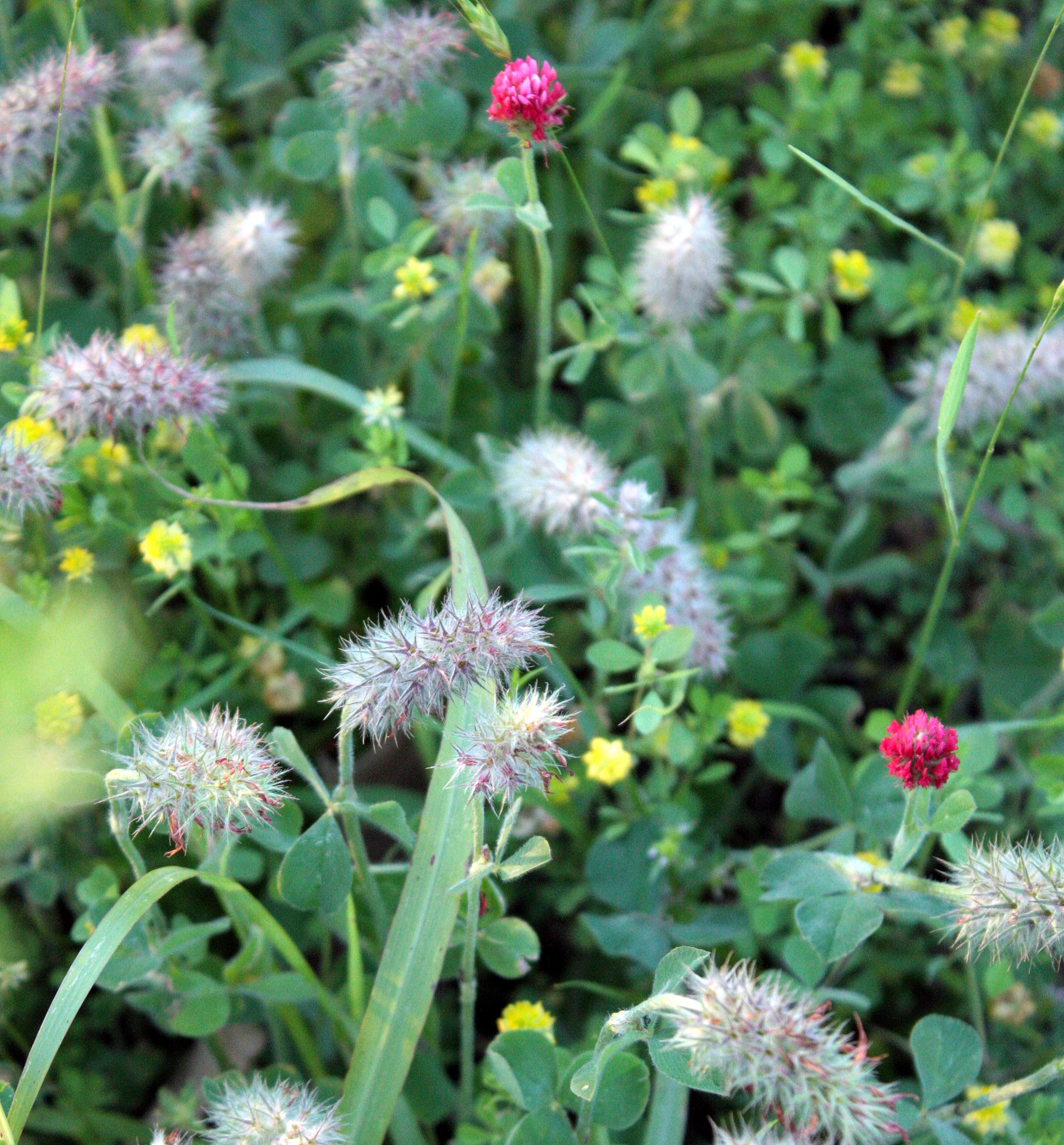
Photography is much the same: whatever strikes my fancy will be captured by the camera. The photo here is from 2011, taken at sunset on my way home along a backroad. Wildflowers (weeds) in a ditch caught my eye, so I stopped and spent a several minutes shooting them. Most were discarded, but I liked the bit of whimsy here.
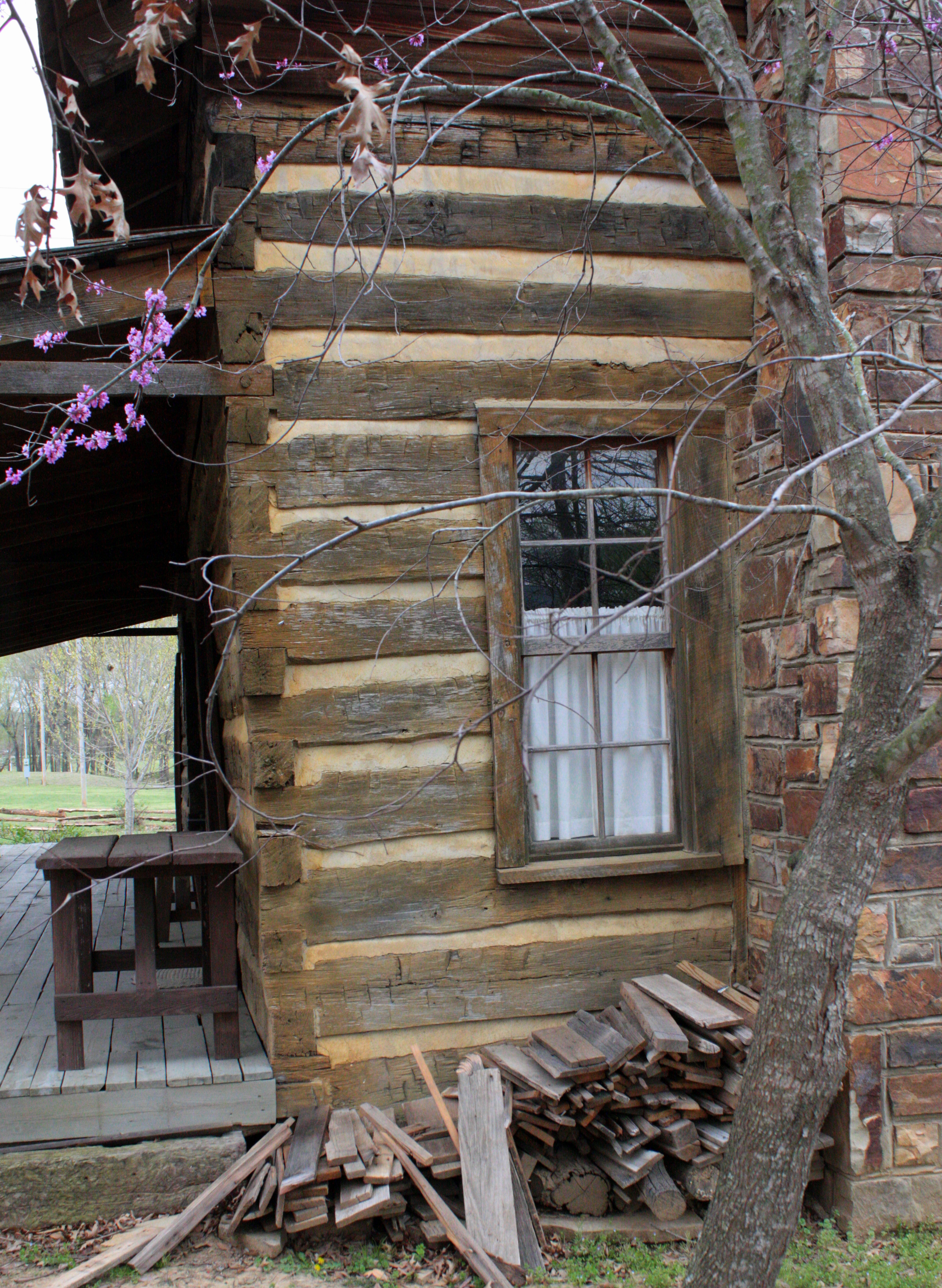
I also like pieces of history, such as this cabin, photographed several weeks before the clover.
c2011, EE
Nearby is an old schoolhouse, a courthouse and jail constructed of stone, an old Army tank, a weathered barn, and a memorial to coalminers.
Something about the cabin, though, invites photographs.
A couple months later, a friend and I went on a writing-and-photography retreat for a weekend, and took a few shots of a town that clings to the mountains, full of history but now crowded with tourists, and overshadowed by social politics. Still, it remains a place full of photography opportunities.
c2011, EE
We’ve been there many times on our own, I for writing conferences and history, she for exploring haunted places, but this time we decided to attempt a writing project together. After all, one of my favorite mystery series is written by a mother-son team; surely a couple of old friends who write all the time could collaborate on a novel, right?
Weeeellll, we attempted it, wrote a few pages and outline notes, and that’s as far as it went. Still, we had a blast, and those few days are a story in themselves, captured in memory and photographs that have, in turn, spurred imagination and the creation of fictional worlds.
Not so strange. A good photograph is like a story. It is a story.
E-mail flooded my inbox, and much of it looked interesting or required a response, but life (people) needed attention, and there was writing and editing to do, so the virtual stack of mail grew into a mountain.
Just the existence of all that information, all those questions, all those updates from friends, was enough stress to make my brain shut down.
Nothing to do but deal with the most pressing messages, compose responses, and then (sigh) toss the rest.
Cold, aren’t I?
Actually, none of my friends or colleagues were ignored, but newsletters, blog posts, industry news, reports — all jettisoned to lighten the load.
As a result, I may be less informed, less inspired, but, wow, do I feel free!
Bizarre, but I have been laughing out loud for no reason other than sheer freedom and joy.
Sounds cheesy, maybe a little old fashioned, but joy is the word.
A person can write wherever he chooses. I am not bound to a place.
A person can write no matter who loves him. I am not bound to a person.
A person need not write to find creative expression. I am not bound to a pen.
In my quest for freedom — not for license, but for true freedom — I have discovered that I have been my own jailer. I chose my chains and wrapped them around myself.
I sought comfort and safety, and erected bars around myself to keep out anything that interfered with those two gods. I wanted never to be hurt again, and so avoided rejection and conflict by telling myself lies.
If the truth were going to set me free, I had first to acknowledge that it is true, and then allow it to do its work.
But truth-telling — and truth-allowing — requires humility, patience, love, and even a sense of humor. If I have nothing to prove, no chip on my shoulder, no axe to grind, the truth has elbow room: it can roll up its sleeves and do its job.
Amazing how much room joy has, too, once I decided what I really and truly want; once I knew what matters most.
One certainty: there’s no use wasting time beating against what I cannot change. My efforts, thoughts, hopes, and creativity are better spent in doing those things that are within my scope to change and to accomplish.
In Hamlet, Polonius said to Laertes, “To thine own self be true, and it must follow, as the night the day, thou canst not then be false to any man,” to which I add this saying by martyred missionary Jim Elliott: “He is no fool who gives up what he cannot keep to gain what he cannot lose.”
I know who I am. I have nothing to prove. I am free. The world lies yonder, waiting for me.
The sky is hazy, a gray veil over pallid blue, as if dreaming of spring but not yet ready to leave winter.
a March day, c. 2012, EE
Like the sky, I miss the sun, and strain toward the new season, knowing it will bring storms as well as sunshine, but longing for change, for newness.
My mind has been occupied with preparations and what awaits: a new house, a new state, a new church, a new city. For someone accustomed to small-town living, I have enjoyed living in the suburb of a city. It breaks the metropolis into manageable pieces. Makes the city not so scary.
In fact, since I’ve been here, I’ve not seen the city proper, just my small radius of comfort.
It’ll be much the same in the new place. However, I’ll be challenged to explore there: old friends live nearby, museums beckon, a memorial stands silent and compelling, history soaks into the very bones.
Once this frenzy passes, and preparation yields to action, then action to settling in, perhaps my mind will quiet enough to see the way back into a novel too long set aside by the expediencies of life. Perhaps I can sit in silence and play the story as if it were a movie hovering in the air before me, and once more populate empty benches with imagined characters.
This past autumn, a question was posed in an online group to which I belong:
I’m an editor, struggling with how to get the best from authors who are not professional writers. As an author myself, I know how easy it is to squelch the delicate creative voice inside, but I need to ensure readability and standards. I also want multiple submissions from this group of authors who are…experts on a narrow topic, so I don’t have many to choose from. How much editing is too much, how much too little? And how do you facilitate the editor-author interaction?
Readability and standards — both of them are concepts writers should understand. Yes, in your own point of view, you’ve told a wonderful story (or, in the case of the nonfiction authors mentioned above, a fascinating piece of nonfiction), but how readable is it? Have you paid attention to grammar and sentence structure and all the nuts-and-bolts stuff that makes a good story easy to read? Or have you tossed all your ideas onto the page in the literary version of a rubbish heap, and now you’re expecting someone else to make it pretty?
Even if grammar or spelling or punctuation isn’t your strength, learn it.
Ask questions. Read reference materials. Look up information online. Consult fellow writers and readers. Talk to experts.
KNOW your craft. HONE your craft.
If that sounds easier said than done, it is.
The hard work must still be done.
Why should anyone else — least of all, an editor — care about your work if you do not?
I wasn’t born knowing how to put together a story or how edit one. I didn’t arrive in this world knowing how to spell, nor even how to speak. None of us were — but we learned.
My response to the above question:
In response to whether or not an editor should rewrite sentences, or simply confine edits to comments in the margin: A good editor does both. It’s not about making over the manuscript into the editor’s image, but about helping the author produce his best work.
Sometimes, a comment in the margin can only confuse the matter, especially when explaining points of grammar, so rewriting the sentence is an excellent form of illustrating the point. Often, I rewrite sentences when they don’t say what the author intends (subject-verb agreement, for instance, or misplaced modifiers).
I’ll also restructure paragraphs that don’t flow well. In those instances, I generally don’t have to rewrite anything, but rearrange the sentences so the ideas will build on each other in a logical or more fluid manner.
My favorite kind of author to work with is one who approaches the editing process with trust and as a partnership, knowing that I want what he wants: an excellent end result = a clean, strong novel that readers will enjoy.
That enjoyment is lessened if they’re constantly stumbling over awkward paragraphs or convoluted sentences.
After all the rough drafts and messiness of the creation process have been cleared away, and you’ve set about polishing your jewel of a novel, pay attention to your audience, and help them enjoy your work.
And that’s what it’s all about, right? Serving our readers.
“Same to you, Selly.” He laughs at the familiar nickname as I step off the dock. “Sleep well.”
Goodbye, cruel world!
In truth, the narrator wasn’t stepping off into the lake, but stepping from the wooden dock onto the grassy lawn, and therefore I could easily fix the sentence to make it say what the author intended.
Writers, never assume readers can see the movie in your head.
Although there are assumptions we can make–when people stand, they stand up, for instance; when they sit, they sit down–there are times when specificity is the key to clear, solid writing.
In the case of the example listed above, the author simply needed to tell us this: “I step off the deck into the grass.” Three simple words, and we know the narrator didn’t suddenly go off the deep end. (Groan if you must! :))
By the way, there are instances when characters might stand down or sit up, and then stand or sit need further specification. Otherwise, leave them alone.
Written for a contest several years ago, this story was also partly the result of a dare among fellow writers: who could write the best romance? According the strangers and friends alike, my name sounds like that of a romance writer.
Unfortunately, I write more in the fantasy / adventure vein, and romance among characters is difficult for me to write well. This time, however, was one of those rare instances when the story wrote itself.
Enjoy! And if you don’t, well, an honest critique is always welcome. It’s how I learn and improve.
By Honor Bound
She does not kneel. She does not bow her head. She does not utter frightened allegiance. She does not beg. She could be one of the Northwomen, strong, proud.
Bearskin cloak broadening his shoulders, the chieftain strides forward.
from moonslightmagic.com
She does not flinch.
He strikes her with the back of his hand.
Her head snaps sideways. She almost stumbles but she stands, chin up, eyes defiant. Touching the red trickle running from her mouth, she licks the blood from her fingertip.
Watching from a short distance, Soren feels a surge of lust.
He smiles at his father’s frustration. The chieftain towers over her, his fists clasping and unclasping as if clutching for stolen power; in silence, she robs Asgard of control.
Long waves of honey-brown hair hang down her back and over her shoulders, falling past her hips. Despite the bruise blackening her cheek and jaw, her skin glows golden. She is accustomed to the sun. Through the tight-fitting sleeves of her silken kirtle, her arms show the sculpting of one to whom physical labor is not unknown. She is not the usual prize.
At her feet lays the pierced, bloody body of her betrothed, a fine-clad stripling with more heart than skill. Soren feels little pity for him. Better to die in glory, sword in hand, than to die slowly in the shadow of a woman stronger than he.
The chieftain growls an order, and men bind her hands behind her. “Put her on a horse!”
“On whose horse, Asgard?” one warrior asks. “We lost no men this day.”
A wicked eyebrow cocked, the chieftain grins. “Choose.”
Fighting, immediate and brutal, breaks out around her. She will belong to the man with whom she rides, as his slave or his wife.
“Soren? Have you no desire for her?” Asgard asks. “A woman in need of breaking?”
Soren considers her calm face and uncowed posture. “Not broken. Won.”
Asgard grunts. “Then win her. And bring the blood.”
Soren dismounts his sturdy north-bred horse and strides through the fray. Fools! To fight but leave the prize unguarded.
He hoists her over his shoulder like a sack of grain, and takes her to the only building still standing in the ruined village—a hut clinging to the hillside like a goat clinging to a mountain.
The fighting fades. A hush follows. He knows the men watch.
Kicking shut the door, he stands her on her feet, cuts her bonds then crosses his arms, studying her in the dim light sifting through cracks in the hovel walls.
Hands at her sides, she again defies the expected, not rubbing her wrists where the rope chafed them, and breathes in quiet evenness beneath the fitted silk of the kirtle. Gray-green eyes, the color of the sea under a stormy sky, gaze at him with unnerving steadiness. A plain leather belt girds her hips, the tongue of it falling between her thighs, a suggestive circumstance that stirs him once more.
Won. Not forced.
“I am Soren.” He is irritated at the unsettled feeling in his stomach. “Asgard, my father, gives you to me.”
“My betrothed is dead”—her voice as detached from emotion as the sun from the earth— “I belong to no one, nor do I give myself to any man.”
“Pride will not save you.” Soren uncrosses his arms and steps forward. Her posture makes her appear taller than she is; the top of her head does not even meet his chin.
He fumbles to find his argument. “Those men will take what you will not give, and your pride will diminish with each taking until the woman you are now will not know the woman you will become.”
Her smile, small though it is, curves full lips into rosy sarcasm. “The barbarian speaks with gilded tongue. If more of your kind wielded such skill with words, your wives would come more willingly to bed.”
He speaks more mockery than truth. “We take them fierce, and breed strong sons.”
“Who yields the strength?” Sea eyes glitter with battle. “The forceful fathers, or the long-suffering mothers? The wind howls against the mountain, but gentle rain carves the stones.”
He reaches for her. She spits in his face.
Dragging a finger through the warm spittle running into his beard, he places it into his mouth with deliberate mockery.
Her lip curls.
“Highness,” he wipes his face with a battle-stained sleeve, “there is only one way out of this hut. Only one way my honor remains unchallenged. Only one way your pride remains untouched.”
Fear crosses her face for the first time since the body of her beloved was tossed at her feet. As if to calm her fluttering heart, she raises a hand to the low neck of her kirtle—and draws a knife.
He flings up his forearm, hears the blade drag across the leather vambrace then twists the knife from her grasp. Hand to her throat, he pushes her back against the center post of the hut.
Her nostrils flare, her eyes narrow. Her pulse is warm beneath his palm.
“Clever, highness, but now what will you use? Teeth? Claws? Kicks? Those have never prevented me before.”
The shadow of sorrow behind the contempt in her eyes, and the slenderness of her throat beneath his broad hand, checks his anger. He nods toward a stool in the center of the floor and releases her.
Back as straight as a ship’s mast, she sits, smoothing the kirtle over her knees, turning the tongue of the girdle so that it drapes at her side.
Pity.
Tapping the knife against his leg, he leans against the crude stone chimney. “The coastal kings are known for their prim ways. Oh, they have their secret lovers, but they have their public queens. And great price is placed on the purity of those queens.”
He pauses, searching her face for understanding. There is only hatred.
“You are pure, else no marriage contract would have been sealed between your father and that of your beloved.”
“Beck is not—was not—my beloved.” Her hands clench on her lap. “He was more brother than lover. He was kind. Brave.” Grief does not overcome her. Lifting her chin, she looks up at him, devoid of tears. “No matter what you do to me, Beck will be avenged.”
The man who wins her will never truly be the conqueror. Yet desire flames in him. He must have her.
“My father requires proof your defenses are breached, highness. Either you give yourself willingly, and I present the blood to Asgard, or I take you by force, and still present the blood to Asgard.”
She seems not to hear, her eyes thoughtful where once they were angry. “How is it you speak so well? You could almost be a noble in my father’s court.”
“Osric and his court are dead.”
“I am aware of my loss.”
How can she sit there, so calm and controlled, while everyone she knew or loved lays dead in the ruined streets?
A wild horse, anger gallops through him. He reins it in, slowing and deepening each breath. Whether angry at her stillness or at what was stolen from her, he refuses to surmise. Such thoughts are not for warriors.
“My mother was, like you, the daughter of a coastal king. It is her speech you recognize.“
“Did your father love your mother?”
“He named her wife.” The tendons in his neck tighten. “You seek to turn the point, highness, but—“
“Why did he give you me?”
“Perhaps you remind him of her.”
“Then why not take me himself?”
“He has women enough.”
“Will you strike me as he did?”
Soren shoves the knife into his belt and yanks her up from the stool. “You are mine.” He bends until their faces are a breath apart. “If you shame me today, I will shame you every day hereafter.”
“Gone is the silver speech,” she murmurs. “Without it, bedding will be an empty thing. For us both.”
“If words are what you want, I’ve words aplenty.”
She tugs at his belt. His body responds, hot and urgent. He reaches for her other arm to draw her to him.
Steel taps his chin. She holds the knife to his throat.
Slowly, he releases her and steps backward.
“I care not for your honor or your shame.” She retreats, placing only a wall of air between them, for he stands before the door.
Fury wars with lust. He says through clenched teeth, “You will regret those words, highness, after my father’s men have had you. Many times.” He forces a smile. “Drop the blade. Take pleasure in the inevitable.”
“It is you who will regret.” Her knife does not waver. “If I do this thing, none of the coastal kings will ransom me.”
“No ransom will be asked.”
The knife tips in her slackening fingers.
“Even if Asgard sought treasure through ransom,” he draws his war-sword from its battered leather sheath, “what is your knife to this?”
He burns, wanting her to come willingly to him, but his persuasions are at an end.
“You are a harsh suitor, Soren Asgardson.” She turns the blade toward her breast.
A chill stabs him. No warrior contemplates self-murder, for the soul is then doomed to wander forever, a dark haunt without hope of peace.
“No!”
He leaps forward, sword thudding to the floor as he reaches both hands for the knife. Its tip scrapes her skin before he wrests it from her. He flings it to the floor. It lands with a clatter, crosswise to the sword.
She stares at him in unspoken combat. Soren gives way first, unable to batter against the despair in the sea-colored eyes.
“This takes too much time.” His words are sharp. “My father’s men expect to hear your cries by now. Or see me return with you across my shoulder, tamed into submission. They already question my honor.”
“If I do what you ask, do you swear to be kind to me from this day onward?”
He stares at her. Kind?
“Will you protect me from all others, and treat me as you might one of your own women? With the dignity accorded their strength?”
He sees again the black bruise left by Asgard’s hand, feels emotion he cannot name.
“Will you call me by name?”
He nods.
“You swear to all of it?”
Voice hoarse, he replies, “Yes, high—“
“Rowena.”
“Rowena.”
Her name on his lips both disturbs and pleases him. Some captives fight, some go limp. The latter he does not want, and the former are often too much trouble. But this one grants him a gift that is already his by right, and gives it so humbly he is undone.
His body clamors for satisfaction; his self craves her esteem. To have the admiration of a strong woman only adds to the honor of a man, for her strength girds his.
Kneeling, he grabs the knife and draws the blade across his upper arm, where his sleeve hides the wound, and lets blood drip onto a dirty blanket crumpled on the broken-down bed.
“This will be Asgard’s proof.” He keeps his gaze on the blanket.
Rowena kneels, taking the knife from him, the touch of her fingers sending lightning bolts along his skin. Slicing off a piece of her kirtle, she binds the cut and pulls down his sleeve to cover the bandage. Only then does he look at her.
Her eyes watching his, she slides the knife back into her bodice.
He can scarce draw breath.
Leaning forward, enveloping him in her honey-colored hair, she takes his face in her hands and kisses him.
The kiss soft, her lips softer, when she withdraws, he is lost.
After a long gaze-locked moment, she takes the bloodstained blanket. “Honor what you swore, Soren Asgardson”—she hands him the war-sword as if she is already a wife preparing her husband for battle—“and your bed will never be cold.”
A friend reminded me of a story snippet I wrote a few years ago, which sent me on a hunt for other old things among the stacks of yellowing paper. Sometimes, I read my old writing and cringe at its clumsiness or pomposity. Sometimes I smile, remembering the moment.
This poem is one of those moments: Driving home from work one clear night, I looked up to see a crisp sliver of moon, and thought with a laugh, “It looks like a needle.” The poem composed itself, but I had to keep repeating it until I arrived home and could write it down.
Seamstress
I turn my face up to the sky
and watch the slivered moon
hang upon a blue-black night
like the spindle of a loom.
If sky were cloth, and I were skilled,
and stars were buttons bright,
what a wond’rous garment we would yield,
and hem it up with light.
c. EE, year unknown
The next poem is not a moment but the culmination of years, an understanding friendship. This friend and I no longer speak, except through occasional “hi, how are you” messages sent via my mother whenever she happens to see him. Sometimes I wish I had honored the poem’s last line. But if friendship is valued, so should be the truth.







 Penworthy Press