Category Archives: Writing

Found Stories

c2011, EE
c2011, EE

When I (briefly) wrote freelance human-interest stories for a small newspaper, my focus was on “found” stories: not major events, not orchestrated photo opportunities, but the everyday lives or histories of people in the community. If a story crossed my path, I followed it:  welcoming home a deployed spouse; surprising parents with a new house; caring for an indomitable adult son stricken with multiple sclerosis; hosting bluegrass and gospel jams each weekend at an old schoolhouse; reuniting with classmates fifty years after they scattered to serve in World War II.

Photography is much the same: whatever strikes my fancy will be captured by the camera. The photo here is from 2011, taken at sunset on my way home along a backroad. Wildflowers (weeds) in a ditch caught my eye, so I stopped and spent a several minutes shooting them. Most were discarded, but I liked the bit of whimsy here.

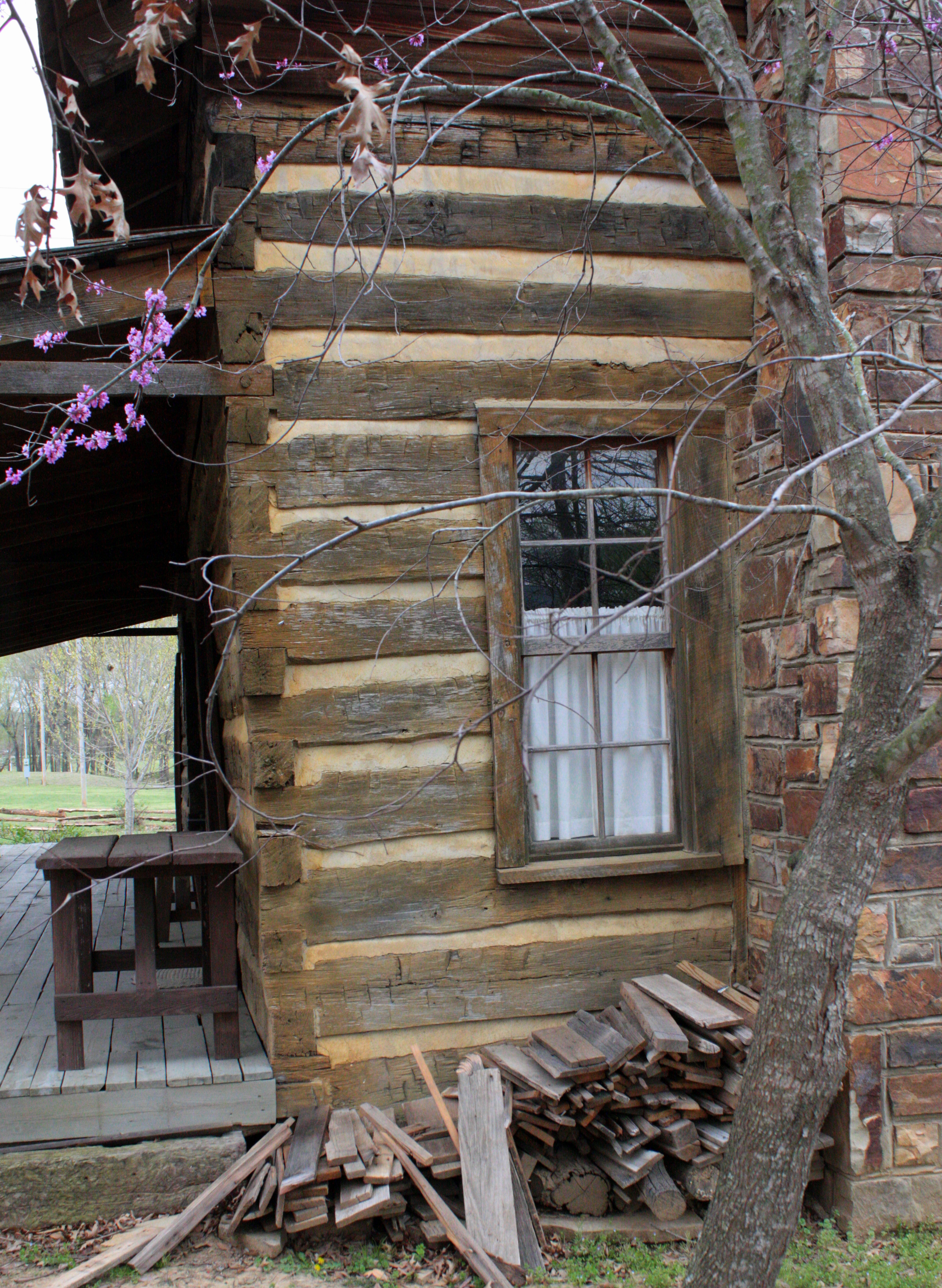
I also like pieces of history, such as this cabin, photographed several weeks before the clover.

c2011, EE
c2011, EE

Nearby is an old schoolhouse, a courthouse and jail constructed of stone, an old Army tank, a weathered barn, and a memorial to coalminers.

Something about the cabin, though, invites photographs.

A couple months later, a friend and I went on a writing-and-photography retreat for a weekend, and took a few shots of a town that clings to the mountains, full of history but now crowded with tourists, and overshadowed by social politics. Still, it remains a place full of photography opportunities.

c2011, EE
c2011, EE

We’ve been there many times on our own, I for writing conferences and history, she for exploring haunted places, but this time we decided to attempt a writing project together. After all, one of my favorite mystery series is written by a mother-son team; surely a couple of old friends who write all the time could collaborate on a novel, right?

Weeeellll, we attempted it, wrote a few pages and outline notes, and that’s as far as it went. Still, we had a blast, and those few days are a story in themselves, captured in memory and photographs that have, in turn, spurred imagination and the creation of fictional worlds.

Not so strange. A good photograph is like a story. It is a story.

Spring Cleaning

c2011, EE
c2011, EE

E-mail flooded my inbox, and much of it looked interesting or required a response, but life (people) needed attention, and there was writing and editing to do, so the virtual stack of mail grew into a mountain.

Just the existence of all that information, all those questions, all those updates from friends, was enough stress to make my brain shut down.

Nothing to do but deal with the most pressing messages, compose responses, and then (sigh) toss the rest.

Cold, aren’t I?

Actually, none of my friends or colleagues were ignored, but newsletters, blog posts, industry news, reports — all jettisoned to lighten the load.

As a result, I may be less informed, less inspired, but, wow, do I feel free!

Giddy

geranium     c EE, 2010
geranium                  c EE, 2010

Bizarre, but I have been laughing out loud for no reason other than sheer freedom and joy.

Sounds cheesy, maybe a little old fashioned, but joy is the word.

A person can write wherever he chooses. I am not bound to a place.

A person can write no matter who loves him. I am not bound to a person.

A person need not write to find creative expression. I am not bound to a pen.

In my quest for freedom — not for license, but for true freedom — I have discovered that I have been my own jailer. I chose my chains and wrapped them around myself.

I sought comfort and safety, and erected bars around myself to keep out anything that interfered with those two gods. I wanted never to be hurt again, and so avoided rejection and conflict by telling myself lies.

If the truth were going to set me free, I had first to acknowledge that it is true, and then allow it to do its work.

But truth-telling — and truth-allowing — requires humility, patience, love, and even a sense of humor. If I have nothing to prove, no chip on my shoulder, no axe to grind, the truth has elbow room: it can roll up its sleeves and do its job.

Amazing how much room joy has, too, once I decided what I really and truly want; once I knew what matters most.

One certainty: there’s no use wasting time beating against what I cannot change. My efforts, thoughts, hopes, and creativity are better spent in doing those things that are within my scope to change and to accomplish.

In Hamlet, Polonius said to Laertes, “To thine own self be true, and it must follow, as the night the day, thou canst not then be false to any man,” to which I add this saying by martyred missionary Jim Elliott: “He is no fool who gives up what he cannot keep to gain what he cannot lose.”

I know who I am. I have nothing to prove. I am free. The world lies yonder, waiting for me.

Preparing — and Dreaming

The sky is hazy, a gray veil over pallid blue, as if dreaming of spring but not yet ready to leave winter.

a March day, c. 2012, EE

Like the sky, I miss the sun, and strain toward the new season, knowing it will bring storms as well as sunshine, but longing for change, for newness.

My mind has been occupied with preparations and what awaits: a new house, a new state, a new church, a new city. For someone accustomed to small-town living, I have enjoyed living in the suburb of a city. It breaks the metropolis into manageable pieces. Makes the city not so scary.

In fact, since I’ve been here, I’ve not seen the city proper, just my small radius of comfort.

It’ll be much the same in the new place. However, I’ll be challenged to explore there: old friends live nearby, museums beckon, a memorial stands silent and compelling, history soaks into the very bones.

Once this frenzy passes, and preparation yields to action, then action to settling in, perhaps my mind will quiet enough to see the way back into a novel too long set aside by the expediencies of life. Perhaps I can sit in silence and play the story as if it were a movie hovering in the air before me, and once more populate empty benches with imagined characters.


A Bit of an Editorial Rant

This past autumn, a question was posed in an online group to which I belong:

I’m an editor, struggling with how to get the best from authors who are not professional writers. As an author myself, I know how easy it is to squelch the delicate creative voice inside, but I need to ensure readability and standards. I also want multiple submissions from this group of authors who are…experts on a narrow topic, so I don’t have many to choose from. How much editing is too much, how much too little? And how do you facilitate the editor-author interaction?

Readability and standards — both of them are concepts writers should understand. Yes, in your own point of view, you’ve told a wonderful story (or, in the case of the nonfiction authors mentioned above, a fascinating piece of nonfiction), but how readable is it? Have you paid attention to grammar and sentence structure and all the nuts-and-bolts stuff that makes a good story easy to read? Or have you tossed all your ideas onto the page in the literary version of a rubbish heap, and now you’re expecting someone else to make it pretty?

Even if grammar or spelling or punctuation isn’t your strength, learn it.

Ask questions. Read reference materials. Look up information online. Consult fellow writers and readers. Talk to experts.

KNOW your craft. HONE your craft.

If that sounds easier said than done, it is.

The hard work must still be done.

Why should anyone else — least of all, an editor — care about your work if you do not?

I wasn’t born knowing how to put together a story or how edit one. I didn’t arrive in this world knowing how to spell, nor even how to speak. None of us were — but we learned.

My response to the above question:

In response to whether or not an editor should rewrite sentences, or simply confine edits to comments in the margin: A good editor does both. It’s not about making over the manuscript into the editor’s image, but about helping the author produce his best work.

Sometimes, a comment in the margin can only confuse the matter, especially when explaining points of grammar, so rewriting the sentence is an excellent form of illustrating the point. Often, I rewrite sentences when they don’t say what the author intends (subject-verb agreement, for instance, or misplaced modifiers).

I’ll also restructure paragraphs that don’t flow well. In those instances, I generally don’t have to rewrite anything, but rearrange the sentences so the ideas will build on each other in a logical or more fluid manner.

My favorite kind of author to work with is one who approaches the editing process with trust and as a partnership, knowing that I want what he wants: an excellent end result = a clean, strong novel that readers will enjoy.

That enjoyment is lessened if they’re constantly stumbling over awkward paragraphs or convoluted sentences.

After all the rough drafts and messiness of the creation process have been cleared away, and you’ve set about polishing your jewel of a novel, pay attention to your audience, and help them enjoy your work.

And that’s what it’s all about, right? Serving our readers.

Writing Your Novel Your Way

Elements of Plotby Terri Main
Elements of Plot
by Terri Main

I recently read the Kindle edition of Elements of Plot: A Personalized Approach by Terri Main, founder of Wordmaster Communications, with a mission of providing writers with “quality publishing and educational services at reasonable prices.”

At 99 cents, Elements of Plot is certainly reasonable, and the material inside is concise, valuable, and fun to read.

First in a projected series (“Writing Your Novel YOUR Way”), Elements of Plot includes a variety of methods to plotting/outlining your novel. It is very readable and well-written–35 pages, so it’s compact– and full of good advice without trying to impose “the” way to approach novel-writing.

Reading books on writing, though useful in many ways, can simply add to the confusion. I’ve read more than fifty of them and if I include articles in Writer’s Digest, The Writer, on blogs and websites, I probably read the equivalent of another fifty or one hundred books in the forty-five years since I first decided I wanted to write things other people would read.

I’ve learned from each of them. Many of them have also confused me. One book was all about plotting and the “proper” way to do that. Another I read, said “plot is an illusion.” According to that author, plot is merely “the accumulated actions the character takes in resolving a problem.” Hmmm… Sounds like a plot to me.

Most require very long and very detailed plot outlines, although the nature of those plot outlines varies greatly. Some look like snowflakes, some like wagon wheels, some are meandering paths, some are written on cards and shuffled, some are pages in a notebook.

Each author has his “one-and-only” way to write an outline.

If you’ve been a writer for any length of time, you’ve run into these one-and-only-way types who just know how a story is supposed to be told. I’ve encountered some recently in a debate over the necessity or usefulness of prologues and epilogues, but that’s a story for another day.

Main is also the author of Creative Calisthenics: A Workout for the Writer’s Imagination, and she recently answered a few of my questions about her new book.

I’m an educator first. One thing we know about education is that different people learn in different ways. The same is true of writing. When I teach magazine writing, I give students six methods of “outlining’ an article. None of which your English teacher told you about. So, I’m very big on adapting to a person’s individual style and helping them optimize that style.

I’ve got a book in outline form right now I’m calling “Noveling by the Seat of your Pants.” No one I can see has written one from that perspective. The big misconception (even among Pantsers) is that they don’t create a plot outline. They do. The plot outline is their first draft. Instead of trying to imagine where the story is going to go and writing down notes, scratching out a line in an outline, and moving around summaries of scenes. They do that with paragraphs and pages.

So, that’s my next big writing book project. This month I’m working on getting a sequel out for another novel.

1. What inspired the series?

Actually, I bought a book on novel writing authored by a woman who taught a class for a major reputable writing school. I started reading it and she was speaking very “authoritatively” about the way to plot a novel. It was a very detailed method planning out every nuance of every scene in every chapter before you began to write anything. Then she said something to the effect that people who don’t do this type of planning simply will not ever be successful writing their novels. They will fail. So, that made me curious about her track record. I looked her up and discovered that aside from the book on novel writing, she had only published a couple of short stories and an article for a literary magazine. She had never actually published a novel.

It started me thinking about the successful authors I knew. Some did do detailed planning, like this author advised. Others made a sort of overview and then filled in the rest as they wrote. Still others “write by the seat of the pants.” As an educator (I spent 30 years teaching college), I already knew different people learn differently. It only made sense that they would approach writing differently as well. That didn’t mean that they couldn’t improve, but that improvement needed to take account of their methodology.

Yet, every book and school out there took the same approach. There was one and only way to write a novel – MY WAY! So, people would grab a hold of one of these methods, and they worked for some, but most got burned out because they were using another person’s tool and not their own. Also, I found that none of the books even recognized that you could write a novel without making detailed plot outlines (of course, only using their method.) So, I wrote a few limited blog posts about the three methods and later expanded it into a short course and then a book.

2. How many books do you think will be included?

I currently have books planned on the following:

Character Development (Character dossiers are fine, but not for everyone. Why not interview a character or discover her as you write?)
World Making (Creating the “world” in which your story takes place)
First drafts, Editing and Revision (Product creation)

And one I am just now beginning to consider adding is Publishing and Marketing YOUR Way. At one time there was really only one way to get that novel published. Find a publisher or agent and hope your novel made its way through the slush pile. That’s still one way, but we have so many others as well. You can go to small traditional publishers who may only publish a few volumes a year, but can give each author a lot of attention.

There are some writer’s collaboratives springing up which share the costs of publishing and marketing, but otherwise run the collaborative like a publisher with standards for publication, etc. Then you can go the self-publishing route and get out a print book on Amazon for as little at $20 and have it distributed to other online sellers for under $100. Or you can go digital and publish ebooks on Kindle, Nook, iPad, Sony and a bunch of other places essentially for free. Each of these has challenges and advantages.

Also a lot of the old rules no longer apply. Self published books in the past simply could not be sold unless you were, say a traveling speaker and sold them after the meetings. Bookstores wouldn’t carry them. But with Amazon carrying just about anything that has been published, you don’t have to worry about the local Mom and Pop not having your book.

I’ve published traditionally with a small publisher and I’ve self published. And honestly, the “respect” that followed traditional publishing helped me get some reviews, but not really a lot of sales. But then, if I want to publish with the Big Houses someday, self-pubbing now might spoil those possibilities. Also some people simply do not have the personality to self-pub. You are in charge of everything. Some of us like that, but others prefer to “just write.”

So, again, there is no one-size fits all approach.

Sounds good to this independent writer!

If you’re interested in any of Main’s other work, here are links to her previous books:Dark Side of the Moon

Death Gets an “F” (A Pinewood College Mystery)

Dark Side of the Moon (A Carolyn Masters Mystery)

Parmenter’s Wager (Science Fiction Short Story)

A Question of Defense (Science Fiction Short Story)

Terri Main’s book announcement blog

She is working on a sequel to Death Gets an “F”, and her traditional publisher has the sequel to Dark Side of the Moon.

So, we are moving along.

And with the various outline methods available — especially in the chapter entitled Creating Detailed Plot Outlines — I have no excuse not to plot my next novel. This pantser had better get crackin’!

Word Desert

Ever experience a writing desert, when all your words evaporate under the glare of reality, depression, insecurity, fear?

I hate fear. It tells me nonsense–“You’re nothing. You can’t write. You speak what no one wants to hear, and write what no one wants to read. You’re a failure.”

Yes, I have failed. Many times. And many times have I faced opposition and conflict, sometimes of my own making, but sometimes the making of others.

Ever been disliked simply because you exist? There was a time, about ten years ago or so, when this verse sustained me:

Do not gloat over me, my enemies! For though I fall, I will rise again. Though I sit in darkness, the LORD will be my light.  -Micah 7:8 (New Living Translation)

An avid, voracious reader ever since my entertainment-oriented five-year-old brain was forced into learning by parents who weren’t afraid of educating me outside the classroom, as an adult I’ve read less and less. There was a time when a stack of books checked out from the library on Saturday might sustain me until, oh, say, Wednesday. Now, however, with the increase in editing work and other life matters, books have been set aside. I’ve even committed the horrific act of halving my library.

Reading for pleasure has become almost impossible. My internal editor must be quieted, and my wide-eyed reader must be set free. It’s not always easy to keep one distracted while the other plays.

And then there’s the dreamy writer, whose far-away thoughts and unfocused gaze too often is overtaken by the sharpish editor, and creativity stunted by protests of correctness or authenticity.

I hate fear.

I said that already. Well, I’ll say it again.

I hate fear.

It represses accomplishment and ingenuity, quashes free thought and individuality, diverts excellence into monotony. Nothing can shine or rise or be different, because anything beyond ordinary attracts attention, and with attention comes attack.

Perhaps that’s why some creators fear success. With success comes criticism. Perhaps they only want praise.

Wouldn’t praise be great? But with accolades often comes apathy, the sense of arrival, ultimate achievement.

So, I’ll take a little praise to keep me encouraged, a little criticism to keep me motivated toward improvement, and a lot of courage to keep slogging–nay, striding–through the desert until the words rain down once more and soak into the hard, cracked soil of neglected imagination.

Eastern Road Rider Magazine

Assumption v. Specificity

I caught this while editing a YA novel this week:

“Same to you, Selly.” He laughs at the familiar nickname as I step off the dock. “Sleep well.”

Goodbye, cruel world!

In truth, the narrator wasn’t stepping off into the lake, but stepping from the wooden dock onto the grassy lawn, and therefore I could easily fix the sentence to make it say what the author intended.

Writers, never assume readers can see the movie in your head.

Although there are assumptions we can make–when people stand, they stand up, for instance; when they sit, they sit down–there are times when specificity is the key to clear, solid writing.

In the case of the example listed above, the author simply needed to tell us this: “I step off the deck into the grass.” Three simple words, and we know the narrator didn’t suddenly go off the deep end. (Groan if you must! :))

By the way, there are instances when characters might stand down or sit up, and then stand or sit need further specification. Otherwise, leave them alone.

How to Alienate an Editor

IMG_5934^ReadWriteEditThe conversation began October 9: “What would be your charges for editing 300 page ms?”

Seems like a simple answer would be in order, right? Just quote a figure and wait for his reply.

But the cost depends on what kind of editing the potential client might need, and whether or not we’d work well together, and–to be honest–whether or not I want to expend much energy on his manuscript. After all, I have to like the story, too, if I’m going to spend weeks or months helping an author prepare a novel for publication.

So, I asked a question or two in return, and included a list of services and fees.

A couple days later, he asked for that information again. I sent it.

Four days after that, he told me a little about himself–he’d spent several years as an editor, too–and then asked for a break on the fees. He also asked (“since you live in Vancouver”) if I’d read an article he’d written.

I don’t live in Canada.

My reply:

Let’s do this: send your first five pages — or any set of five consecutive pages, the rougher the better — and I’ll provide edits for free, which is a courtesy for new clients.

Then we can evaluate one another, and decide if we’ll be a good team.

Not only do I freelance as an editor, but I currently work for a publishing company, so I’m almost always working on a project for someone else, in addition to producing my own writing. If you need a quick turnaround (within a month, for instance), I may not be the editor you need. However, if you have a couple of months, I can accept the assignment.

…If we decide to work together, I’ll propose a flat fee for the manuscript then. Sound good?

If we decided to work together. If.

Another couple of days, he sent his five pages, I edited and returned them, and all seemed well with the world.

The potential client:

Thanks for sending  a sample edit and your comments. Where do we go from here?

He asked questions about the editing process and, once more, inquired about the fees.

Me:

In answer to your question about changes: Sometimes I make changes directly in the text, but the author always sees those changes and can make his own revisions or leave things the same. As for the comments in the margins, I use those to explain why I made a change, or why an author should consider a change.

…As for the fee, I must be honest: It’s probably going to be expensive. I’ll consider dropping the…rate down to $__/page, but that’s still a hefty price.

…Are you sure you want to pay for an editor at this stage…?

…I’d like to find out whether or not we’ll work well together. To that end, there’s a questionnaire…(By asking these questions, I get to know you as a person and as an author, and am more able to make an informed decision.

A month passed. I moved on to other projects.

Then the author responded, only halfway answering vital questions, which I re-asked. Turns out, what I thought was a novel was actually autobiographical material recounting the author’s experiences as an immigrant to Canada from India. Caught my interest, but from what I’d read of the manuscript, the story needed shaping.

So I made further suggestions for the author to consider, including the notion that he might consider beta readers (colleagues, friends) who could provide feedback on the book at no cost to him. After all, he seemed concerned about the cost of a professional edit, and readers can be the best editors, in that they know what they like and what they don’t. Honest, detailed feedback from beta readers can be an author’s goldmine.

The author:

I am sending you synopsis of my ms which answers most of your questions. The ms i complete and ready to be sent. I have been a copy editor with newspapers so I am hoping my ms will not need much editing. However, I would welcome critique of the story/ structure etc.

Would you be inclined to do a sample edit? Plse advise.

Journalistic writing is different from fiction in goal and structure: one conveys information first then story, while one focuses on story while interspersing information as necessary. These are generalities, of course–sometimes journalism can read like fiction, and sometimes a novel can use the form of journalism to tell its story.

Still, simply because one is experienced at one type of writing does not mean one is prepared for the other. In this case, the author needed an editor to help shape the material into a coherent, smooth story rather than just a list of facts and events.

My response:

I did a sample edit back in October (document attached), but if you want a critique (…evaluation of story, structure, etc.), go ahead and send along the whole manuscript.

…FYI: I will be working on two existing projects, as well, so if you have a deadline, please let me know so I can adjust my schedule accordingly.

If this response sounds clipped, it is. I was annoyed at the circular conversation, at the covering of old ground and the lack of forward motion.

Again, he asked:

Can you please give me a ball park figure so I know if your charges are within my budget?

Me, setting aside the niceties and being blunt, and doing a bit of repetition of my own, though still with the author’s good in mind as I typed the reply:

Today, you sent a request concerning my cost to work on your manuscript; below is a message I sent about a week ago, quoting $__/page for a critique. An in-depth content or storytelling edit would be $__/page.

…We keep circling the same topics/questions, which seems to indicate neither of us is ready to tackle this project beyond where it is now. My price is very likely outside your preferred range, which perhaps makes you reluctant to proceed, and I am currently contracted to edit two manuscripts for a publisher as well as produce my own writing, so am not able to take on an in-depth editing until well after the New Year.

For free (or almost free) editing, nothing beats beta readers you can trust to give you honest feedback on your work. You’ll have to do the editing/revisions yourself, and maybe pay for coffee or lunch for the readers as you discuss the book, but it’s worth it.

The author:

Thank you for your insensitive and rude response. For your info, I have been a copy editor on daily newspapers in Canada so i resent your rude and patronizing remarks.

Since you are so busy, I’ll look for someone else who knows how to treat clients with respect and work with them, not against them.

My response:

We must have communicated at cross purposes, because I did not intend any rudeness in my response.

I do have copies of all of our correspondence. We have circled the same topics on more than one occasion, and I have answered the same questions more than once, which tells me that we are not communicating. That is simply a statement of fact; it is not intended as rudeness.

Just as you have worked many years as a copy editor, I have worked many years as a writer and editor. This isn’t my first rodeo.

I’m sorry that you are not satisfied with this process, but this just lets us both know we likely would not have been a good fit as a writer/editor team.

I wish you well in your future endeavors.

Only one other time has an author attacked like that, and it was about ten years ago, when an elderly writer whom I did not know scolded me over the phone for not responding to his e-mails. (I never received them.)

As someone pointed out regarding the current author, though, I may have experienced a cultural gender clash. This is only speculation, but he may have expected me to slash my fees because bartering is an acceptable part of purchasing goods or services, and I should have done whatever it took to get the job. (Bartering’s okay with me, but I also have a bottom line.) Also, as a woman, I should have shown more deference to a man.

The communication process was a preview of what I would likely encounter during the editing: he might not actually read what I wrote, would ignore my suggestions, or not even consider looking at his work from a different angle. He might keep pushing me to negotiate this or that. We would go ’round and ’round the same topics, making little or no progress.

Not my idea of fun, nor of a good way to make a paycheck.

In this case, who knows if I would actually have been paid once I performed the work?

Simply because one hangs out a shingle advertising one’s expertise, and a potential client approaches, does not mean one is obligated to accept the commission. There is more than money to consider when making a decision.


Literary Kerfuffle

So, I unwittingly started a kerfuffle when I posted my response to a literary discussion concerning the “rules” for prologues.

And, since I didn’t toe the expected line, someone presented me with a bit of a finger-wagging scold.

Scold away, I say!

Here’s what the fuss was about:

A gentleman posted a topic for discussion, and in his post he stated, “(S)ome people have made comments about prologues in novels that surprised me. It seems that different people have different views on them and their purpose. Not all novels need a prologue. But for those that have them, to my mind, a prologue is a teaser.”

Then he presented a list of what a prologue should or should not be, and ended with the question, “Agree/disagree?”

Some folks agreed with the list of rules, some took exception to a point or two, and one gentleman gave this response:

A good subject to raise in view of the various opinions expressed elsewhere…True, prologues are often short, but I don’t think the length matters too much so long as the piece is well-written…Prologues seem to fit into some works more than others. Have a look at Ken Follett’s “The small boys came early for the hanging etc” in his prologue to The Pillars of the Earth. If you don’t read it you miss a heck of a lot; it both teases and foreshadows and, in my view anyway, is necessary.

Follett’s sequel World Without End doesn’t have a prologue. I found it interesting to compare his techniques.

Logical, with some backup material to support his remarks.

Then I waded in.

I’m leery of rules. And I’m especially leery of rules that are based on a particular writer’s (or group of writers) preferences.

Although there are some painfully bad prologues in this world, there are many that exhibit fine examples of condensed storytelling.

A prologue isn’t always necessary, true, but if it’s there, it needs to carry storytelling weight. It can reveal history, it can tease future events, it can be a scene that doesn’t fit neatly into the main body of the text, but it must, must, must add to the story.

Arbitrary rules go out the window if they exist at the expense of story.

Someone disagreed:

(R)ules…develop in response to trends & needs, & to avoid chaos. They help prevent newcomers from reinventing the wheel.

The list that started this thread is open for debate – thus the purpose of this thread, so they may or may not represent generally accepted rules.

The “rule” I live by is “you gotta know the rules to break them” (& to know if/when/how/why to break them).

Before breaking them or deeming them arbitrary, it deserves our attention to know if they really are rules, & why they exist.

Before passing judgment on whether rules ought be broken, I think we’re just establishing what basic rules exist in the fiction world re: prologues. Whether to follow them is another matter.

Okay.

I’m all for knowing the rules. After all, they exist for a reason. My objection in this case is notion that prologues have rules.

There are writers who abhor them and writers who love them; writers with poor prologue execution, and writers whose prologues are poetry or exquisite short stories. Prologues are short, long, back story, future action, teasers, packed with information, and so on. Prologues are as different as the writers who write them.

My response:

Who or what is the arbiter of the prologue rules? Is there one? Why must a prologue (or an epilogue, for that matter) be subject to rules, outside of helping to tell the story?

Just as in other areas of life, there are bandwagon issues in literary circles: “never use an adverb” or “never use flashbacks”, and so on.

These “rules” are often preferences, not grammatical or mechanical necessities, or storytelling must-haves.

And though I can advocate for knowing the rules in order to break them well, I still argue that the prologue issue (should a story ever have a prologue, or what must a prologue include?) is not itself a rule, but a preference.

The written word is limited in its ability to convey tone of voice. That is evident in the response below, because the author has read into my words something that didn’t exist when I typed them:

So the opinions here are negated, unnecessary & this is a silly discussion?

…Just because no one’s yet (to my knowledge) written a book about the prologue & laid down rules doesn’t mean some unspoken rules exist…I’d further guess a lot of publishing houses have very definite, articulated rules re: prologues, written for all editors to heed (& break when appropriate).

Preference or not, it’s good to know what the literary preference is, figure out why, & know when to or not to heed it.

By answering here, I’m trying to return to the subject & take the confrontational tone out. Please follow suit.

Well, that’s a head-scratcher. I was never off topic. Never said anyone’s opinion was negated or unnecessary, never said the discussion was silly. Confrontational tone? I can see how my questions might have seemed that way. I objected to imposing rules where none exist.

Nor, in my opinion, should such rules exist. There may be a basic story structure we all employ — beginning, middle, end, with an arc of rising action, climax, and falling action — but we all use that structure to serve our stories, not twist our stories to serve that structure.

Some tales are told inside out. Some are told backward. Some rely heavily on dialogue, some on action. Some are introspective, some spend very little time in the main character’s thoughts. Some have epilogues or prologues. Some use lines of poetry as chapter titles. Some only number their chapters. Whatever works. Whatever serves the story should be used.

I hate seeing young or rookie authors being hemmed in by storytelling “rules” that are imprisoning and arbitrary. One editor said she hates the word atop, and will strike it from every manuscript in which it appears. At a conference several years ago, the keynote speaker (a woman) said that women should not write battle scenes, because women are too soft to write with real grit. One writer likes to keep his descriptions to one sentence, and another likes to invite the reader into the scene by including an entire paragraph.

Different approaches, but certainly none of them following a rule authors can point to in a grammar book or a storytelling guide.

Preferences, not rules.

And I still love a well-written prologue.