All posts by Penworthy Press

Penworthy Press is a collective of independent authors

Perspective and Storytelling

No, I’m not going to dive into a point-of-view lecture (I’ve done that too many times, and have borrowed from the lectures of others).

Yes, point of view is eminently important in shaping a story, lending it tone, flavor, expression.

What about perspective? How does the mountain look from your hero’s point of view? From the villain’s? From the guy on the street’s? From the guy who lives in a yurt at the top?

EE, a walk at sunset in April, c2013

This photo makes the water tower appear small and the tiny barbecue grill seem greater.

We know that’s just a trick of the eye, made so by where we stand.

How do your characters view their world?

How do those perspectives conflict, mesh, create new perspectives?

How do those perspectives affect the story?

Death Comes to Pemberley: A Partial Review

200px-CassandraAusten-JaneAusten(c.1810)_hiresI’m a Jane Austen fan, ever since I read Sense and Sensibility and Pride and Prejudice as a young teenager, and giggled at the subtle, gentle humor of those comedies of manners. Before opening the books, I was warned they might be difficult to understand for readers used to being spoon-fed ideas, so I’d best pay attention.

I did. And I loved them.

Then, in my twenties, I encountered Persuasion, and my first attempt at reading it ended after the first chapter or so: too many commas, as if Austen had found them on sale at a punctuation store, and made free with them all over the page. (Those extraneous commas may have loomed large due to my state of mind at the time rather than any quirk in the writer’s presentation.)

However, a friend had given me the book, despite herself not liking Austen, so I determined to overlook the excess punctuation and finish the story. When I did, I found a lead character with which I could identify, having myself been persuaded despite my heart.

160px-Jane_Austen_signature_from_her_will.svgNow, I own copies of each complete Austen novel, a biography, some of her early writings (fun!), and various incarnations of her stories on film (three versions of Pride and Prejudice, for instance, and two of Persuasion, and have owned up to three copies of Emma, though one has since gone away).
51sBuLT1ZzLAlthough amused at the recent romantic comedy/horror story mash-ups of the novels (Pride and Prejudice and Zombies, and Sense and Sensibility and Sea Monsters), I wasn’t intrigued enough to read them, and although many modern writers have created sequels or spinoffs of the original material, I hadn’t read any until checking out a library copy of Death Comes to Pemberley by P.D. James, an author whose mysteries I’ve enjoyed reading on occasion. (She is also the author of a dystopian science fiction novel, The Children of Men, that became a movie starring Clive Owen, and her Adam Dalgliesh novels were adapted for television; I watched them on Mystery! on PBS.)

Happy to have a stack of books to relish, I chose Death Comes to Pemberley as my first course in a literary meal.

The prologue amused, because it mimicked Austen, and I thought, “Well done, Baroness James!”

But then I hit chapter one. Then chapter two. And realized this was neither as scintillating as Jane Austen nor as mysterious as P.D. James, but some strange, bland mess that respected neither the authors nor the source material.

The characters from Pride and Prejudice lost their personalities, and became strangers to the reader, with Darcy and Elizabeth questioning their marriage: Should they have married at all? Did they love one another? Did Elizabeth choose Darcy only for his money?

James seems to have missed the fact that Elizabeth was a great one for irony: she would say the opposite of her true feelings or thoughts on a matter, just to poke fun at herself or to spar with a conversational partner. Therefore, she was not being serious in Pride and Prejudice when she mentioned falling in love with Darcy only after seeing his sumptuous estate.

Before the visit to Pemberley, she also had his letter, revealing some uncomfortable truths as well as making himself plain. I figure that went a long way toward kindling romantic feelings, which were likely present beforehand, although disguised as conflict. (There is a distinct push-pull when one is attracted to someone one believes is not quite acceptable, and Elizabeth and Darcy kept circling one another in social situations, never quite able to not engage.)

So, just those three things — the letter, the pre-existing attraction, and Elizabeth’s character — negate the doubts and second thoughts presented in James’s novel.

There was a distinct lack of suspense about this mystery. There’s no tension, intrigue, or interesting quality in the writing.

I didn’t care that Wickham was accused of murder. I never liked him anyway. He was a scoundrel and cad — as presented in P & P — and therefore why should I care now? Also, and I didn’t like the fact that a likeable, reasonable character (Colonel Fitzwilliam) was being written as the unlikable side of a love triangle, as well as a potential suspect in the murder of another somewhat likeable character (Captain Denney).

I tried liking Death Comes to Pemberley, but could only slog through until several pages after Wickham was found beside Denney’s body, and then I had to admit I was too bored and annoyed to continue reading.

We writers all have times when the words are enemies we fight, or when the stories are mountains we can’t climb with any grace, and I have loved James’s novels in the past. This one book is not the end of that affection. It’s an aberration. I shall not recommend it to other readers, because there are far better examples of her work elsewhere.

Found Stories

c2011, EE
c2011, EE

When I (briefly) wrote freelance human-interest stories for a small newspaper, my focus was on “found” stories: not major events, not orchestrated photo opportunities, but the everyday lives or histories of people in the community. If a story crossed my path, I followed it:  welcoming home a deployed spouse; surprising parents with a new house; caring for an indomitable adult son stricken with multiple sclerosis; hosting bluegrass and gospel jams each weekend at an old schoolhouse; reuniting with classmates fifty years after they scattered to serve in World War II.

Photography is much the same: whatever strikes my fancy will be captured by the camera. The photo here is from 2011, taken at sunset on my way home along a backroad. Wildflowers (weeds) in a ditch caught my eye, so I stopped and spent a several minutes shooting them. Most were discarded, but I liked the bit of whimsy here.

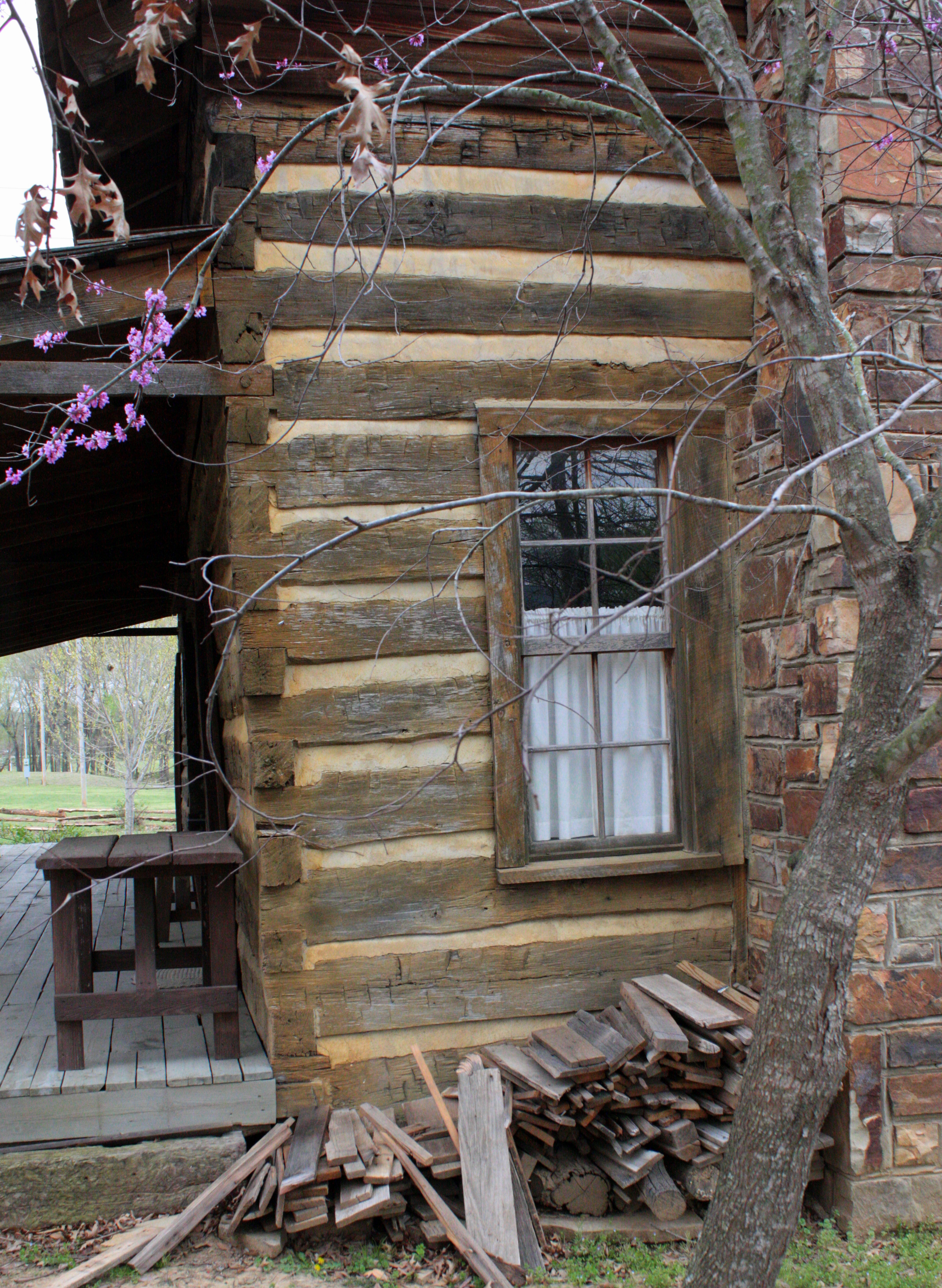
I also like pieces of history, such as this cabin, photographed several weeks before the clover.

c2011, EE
c2011, EE

Nearby is an old schoolhouse, a courthouse and jail constructed of stone, an old Army tank, a weathered barn, and a memorial to coalminers.

Something about the cabin, though, invites photographs.

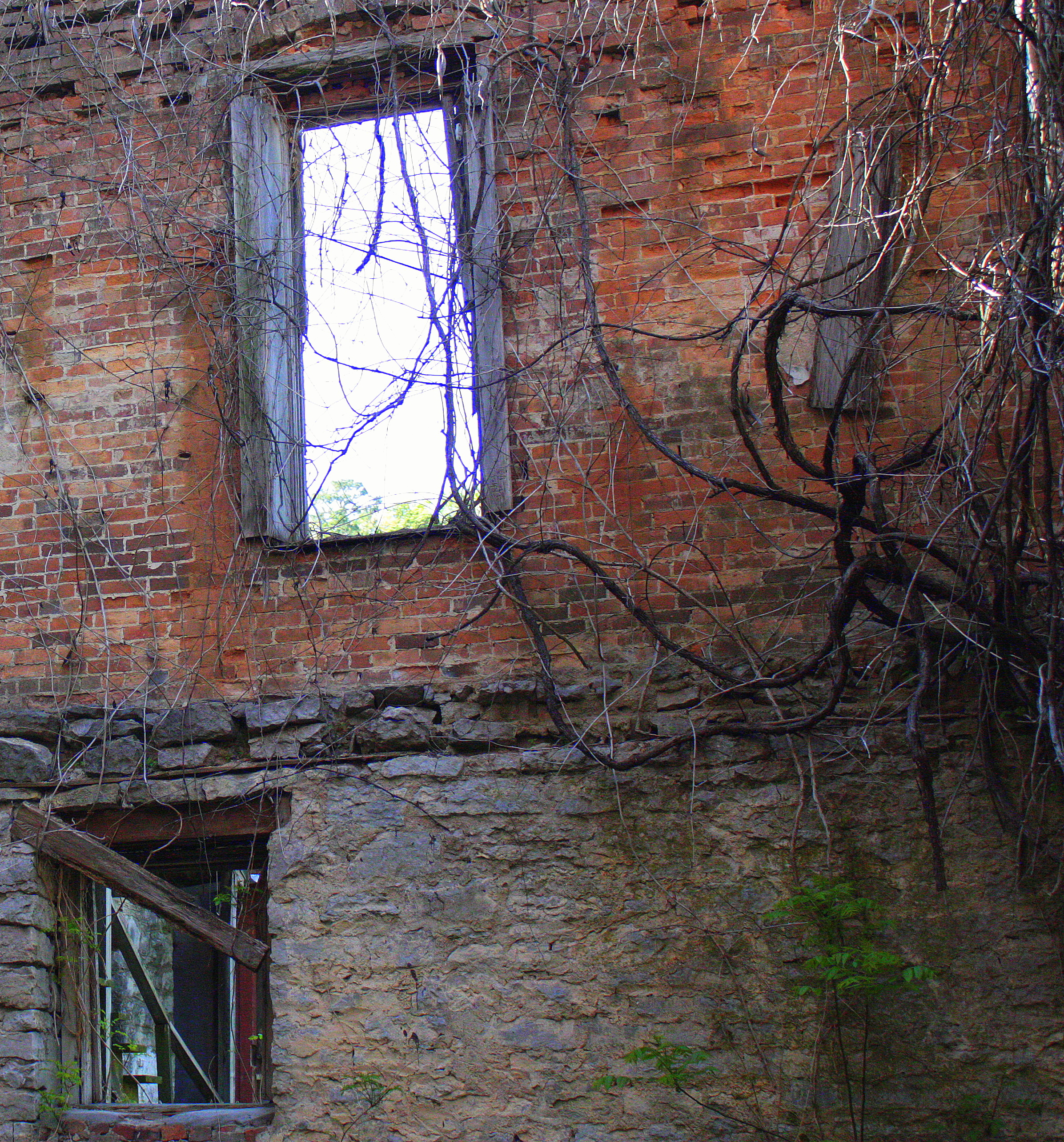
A couple months later, a friend and I went on a writing-and-photography retreat for a weekend, and took a few shots of a town that clings to the mountains, full of history but now crowded with tourists, and overshadowed by social politics. Still, it remains a place full of photography opportunities.

c2011, EE
c2011, EE

We’ve been there many times on our own, I for writing conferences and history, she for exploring haunted places, but this time we decided to attempt a writing project together. After all, one of my favorite mystery series is written by a mother-son team; surely a couple of old friends who write all the time could collaborate on a novel, right?

Weeeellll, we attempted it, wrote a few pages and outline notes, and that’s as far as it went. Still, we had a blast, and those few days are a story in themselves, captured in memory and photographs that have, in turn, spurred imagination and the creation of fictional worlds.

Not so strange. A good photograph is like a story. It is a story.

Spring Cleaning

c2011, EE
c2011, EE

E-mail flooded my inbox, and much of it looked interesting or required a response, but life (people) needed attention, and there was writing and editing to do, so the virtual stack of mail grew into a mountain.

Just the existence of all that information, all those questions, all those updates from friends, was enough stress to make my brain shut down.

Nothing to do but deal with the most pressing messages, compose responses, and then (sigh) toss the rest.

Cold, aren’t I?

Actually, none of my friends or colleagues were ignored, but newsletters, blog posts, industry news, reports — all jettisoned to lighten the load.

As a result, I may be less informed, less inspired, but, wow, do I feel free!

Giddy

geranium     c EE, 2010
geranium                  c EE, 2010

Bizarre, but I have been laughing out loud for no reason other than sheer freedom and joy.

Sounds cheesy, maybe a little old fashioned, but joy is the word.

A person can write wherever he chooses. I am not bound to a place.

A person can write no matter who loves him. I am not bound to a person.

A person need not write to find creative expression. I am not bound to a pen.

In my quest for freedom — not for license, but for true freedom — I have discovered that I have been my own jailer. I chose my chains and wrapped them around myself.

I sought comfort and safety, and erected bars around myself to keep out anything that interfered with those two gods. I wanted never to be hurt again, and so avoided rejection and conflict by telling myself lies.

If the truth were going to set me free, I had first to acknowledge that it is true, and then allow it to do its work.

But truth-telling — and truth-allowing — requires humility, patience, love, and even a sense of humor. If I have nothing to prove, no chip on my shoulder, no axe to grind, the truth has elbow room: it can roll up its sleeves and do its job.

Amazing how much room joy has, too, once I decided what I really and truly want; once I knew what matters most.

One certainty: there’s no use wasting time beating against what I cannot change. My efforts, thoughts, hopes, and creativity are better spent in doing those things that are within my scope to change and to accomplish.

In Hamlet, Polonius said to Laertes, “To thine own self be true, and it must follow, as the night the day, thou canst not then be false to any man,” to which I add this saying by martyred missionary Jim Elliott: “He is no fool who gives up what he cannot keep to gain what he cannot lose.”

I know who I am. I have nothing to prove. I am free. The world lies yonder, waiting for me.

The Blue Chair

c. 2010, EE
c. 2010, EE

For the confused among us, no, this is not a blue chair. It’s quite yellow, in fact, and it’s nowhere near as fancy as the one described in the poem below, but this is a favorite photo of mine, taken on a hotel balcony one autumn while I and a friend were on a writing retreat. The cropping is odd because there was clutter on the balcony, but the light was perfect.

The Blue Chair

It absorbs my attention
like a black hole vacuums light –
a lone blue chair
amid dull grey and faded black,

a flamboyant woman
attending a black-tie affair
in a periwinkle gown,

delicate scrolling arms
swirling in metallic mazes
leading nowhere.

c. 2004, EE

Preparing — and Dreaming

The sky is hazy, a gray veil over pallid blue, as if dreaming of spring but not yet ready to leave winter.

a March day, c. 2012, EE

Like the sky, I miss the sun, and strain toward the new season, knowing it will bring storms as well as sunshine, but longing for change, for newness.

My mind has been occupied with preparations and what awaits: a new house, a new state, a new church, a new city. For someone accustomed to small-town living, I have enjoyed living in the suburb of a city. It breaks the metropolis into manageable pieces. Makes the city not so scary.

In fact, since I’ve been here, I’ve not seen the city proper, just my small radius of comfort.

It’ll be much the same in the new place. However, I’ll be challenged to explore there: old friends live nearby, museums beckon, a memorial stands silent and compelling, history soaks into the very bones.

Once this frenzy passes, and preparation yields to action, then action to settling in, perhaps my mind will quiet enough to see the way back into a novel too long set aside by the expediencies of life. Perhaps I can sit in silence and play the story as if it were a movie hovering in the air before me, and once more populate empty benches with imagined characters.