Category Archives: Life

Snow!

Snow was still falling during my break from editing about an hour ago, and the plastic “bubbles” covering the basement windows were covered in thick layers of white. Rather than blocking the light this morning, the snow enhanced it, creating a strangely bright glow. The light muted as evening arrived, but I love the brilliance snow lends the night.

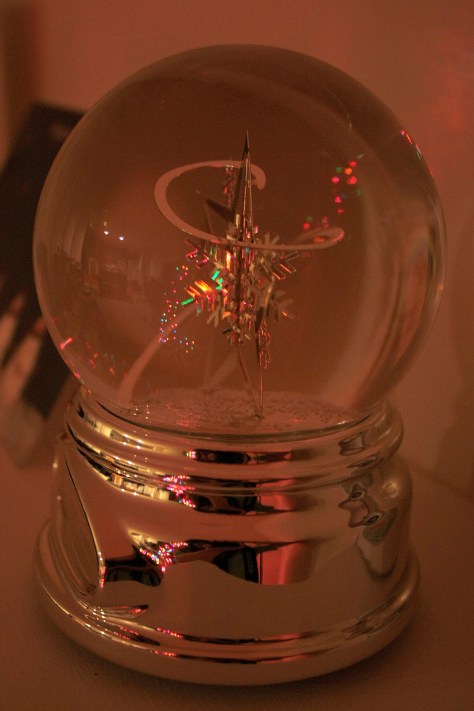
Below is a photo I took last Christmas: lights strung around a tree and reflected in a snow globe on the fireplace mantle. (And, if you look closely enough, you can see the camera strap’s reflection, too, and my funky distorted image.)

c. EE, December 2011

How to Alienate an Editor

IMG_5934^ReadWriteEditThe conversation began October 9: “What would be your charges for editing 300 page ms?”

Seems like a simple answer would be in order, right? Just quote a figure and wait for his reply.

But the cost depends on what kind of editing the potential client might need, and whether or not we’d work well together, and–to be honest–whether or not I want to expend much energy on his manuscript. After all, I have to like the story, too, if I’m going to spend weeks or months helping an author prepare a novel for publication.

So, I asked a question or two in return, and included a list of services and fees.

A couple days later, he asked for that information again. I sent it.

Four days after that, he told me a little about himself–he’d spent several years as an editor, too–and then asked for a break on the fees. He also asked (“since you live in Vancouver”) if I’d read an article he’d written.

I don’t live in Canada.

My reply:

Let’s do this: send your first five pages — or any set of five consecutive pages, the rougher the better — and I’ll provide edits for free, which is a courtesy for new clients.

Then we can evaluate one another, and decide if we’ll be a good team.

Not only do I freelance as an editor, but I currently work for a publishing company, so I’m almost always working on a project for someone else, in addition to producing my own writing. If you need a quick turnaround (within a month, for instance), I may not be the editor you need. However, if you have a couple of months, I can accept the assignment.

…If we decide to work together, I’ll propose a flat fee for the manuscript then. Sound good?

If we decided to work together. If.

Another couple of days, he sent his five pages, I edited and returned them, and all seemed well with the world.

The potential client:

Thanks for sending  a sample edit and your comments. Where do we go from here?

He asked questions about the editing process and, once more, inquired about the fees.

Me:

In answer to your question about changes: Sometimes I make changes directly in the text, but the author always sees those changes and can make his own revisions or leave things the same. As for the comments in the margins, I use those to explain why I made a change, or why an author should consider a change.

…As for the fee, I must be honest: It’s probably going to be expensive. I’ll consider dropping the…rate down to $__/page, but that’s still a hefty price.

…Are you sure you want to pay for an editor at this stage…?

…I’d like to find out whether or not we’ll work well together. To that end, there’s a questionnaire…(By asking these questions, I get to know you as a person and as an author, and am more able to make an informed decision.

A month passed. I moved on to other projects.

Then the author responded, only halfway answering vital questions, which I re-asked. Turns out, what I thought was a novel was actually autobiographical material recounting the author’s experiences as an immigrant to Canada from India. Caught my interest, but from what I’d read of the manuscript, the story needed shaping.

So I made further suggestions for the author to consider, including the notion that he might consider beta readers (colleagues, friends) who could provide feedback on the book at no cost to him. After all, he seemed concerned about the cost of a professional edit, and readers can be the best editors, in that they know what they like and what they don’t. Honest, detailed feedback from beta readers can be an author’s goldmine.

The author:

I am sending you synopsis of my ms which answers most of your questions. The ms i complete and ready to be sent. I have been a copy editor with newspapers so I am hoping my ms will not need much editing. However, I would welcome critique of the story/ structure etc.

Would you be inclined to do a sample edit? Plse advise.

Journalistic writing is different from fiction in goal and structure: one conveys information first then story, while one focuses on story while interspersing information as necessary. These are generalities, of course–sometimes journalism can read like fiction, and sometimes a novel can use the form of journalism to tell its story.

Still, simply because one is experienced at one type of writing does not mean one is prepared for the other. In this case, the author needed an editor to help shape the material into a coherent, smooth story rather than just a list of facts and events.

My response:

I did a sample edit back in October (document attached), but if you want a critique (…evaluation of story, structure, etc.), go ahead and send along the whole manuscript.

…FYI: I will be working on two existing projects, as well, so if you have a deadline, please let me know so I can adjust my schedule accordingly.

If this response sounds clipped, it is. I was annoyed at the circular conversation, at the covering of old ground and the lack of forward motion.

Again, he asked:

Can you please give me a ball park figure so I know if your charges are within my budget?

Me, setting aside the niceties and being blunt, and doing a bit of repetition of my own, though still with the author’s good in mind as I typed the reply:

Today, you sent a request concerning my cost to work on your manuscript; below is a message I sent about a week ago, quoting $__/page for a critique. An in-depth content or storytelling edit would be $__/page.

…We keep circling the same topics/questions, which seems to indicate neither of us is ready to tackle this project beyond where it is now. My price is very likely outside your preferred range, which perhaps makes you reluctant to proceed, and I am currently contracted to edit two manuscripts for a publisher as well as produce my own writing, so am not able to take on an in-depth editing until well after the New Year.

For free (or almost free) editing, nothing beats beta readers you can trust to give you honest feedback on your work. You’ll have to do the editing/revisions yourself, and maybe pay for coffee or lunch for the readers as you discuss the book, but it’s worth it.

The author:

Thank you for your insensitive and rude response. For your info, I have been a copy editor on daily newspapers in Canada so i resent your rude and patronizing remarks.

Since you are so busy, I’ll look for someone else who knows how to treat clients with respect and work with them, not against them.

My response:

We must have communicated at cross purposes, because I did not intend any rudeness in my response.

I do have copies of all of our correspondence. We have circled the same topics on more than one occasion, and I have answered the same questions more than once, which tells me that we are not communicating. That is simply a statement of fact; it is not intended as rudeness.

Just as you have worked many years as a copy editor, I have worked many years as a writer and editor. This isn’t my first rodeo.

I’m sorry that you are not satisfied with this process, but this just lets us both know we likely would not have been a good fit as a writer/editor team.

I wish you well in your future endeavors.

Only one other time has an author attacked like that, and it was about ten years ago, when an elderly writer whom I did not know scolded me over the phone for not responding to his e-mails. (I never received them.)

As someone pointed out regarding the current author, though, I may have experienced a cultural gender clash. This is only speculation, but he may have expected me to slash my fees because bartering is an acceptable part of purchasing goods or services, and I should have done whatever it took to get the job. (Bartering’s okay with me, but I also have a bottom line.) Also, as a woman, I should have shown more deference to a man.

The communication process was a preview of what I would likely encounter during the editing: he might not actually read what I wrote, would ignore my suggestions, or not even consider looking at his work from a different angle. He might keep pushing me to negotiate this or that. We would go ’round and ’round the same topics, making little or no progress.

Not my idea of fun, nor of a good way to make a paycheck.

In this case, who knows if I would actually have been paid once I performed the work?

Simply because one hangs out a shingle advertising one’s expertise, and a potential client approaches, does not mean one is obligated to accept the commission. There is more than money to consider when making a decision.

What Love Looks Like

This week, I’m visiting family for Christmas, and one might think that, after many months away and long hours of travel to return, I might forego any editing work or writing, and spend all my time in the warm embrace of close kindred.

That embrace has not always been one of comfort, but of control and bought affection. It smothered. It threatened. It even attempted murder.

More than once.

But some of us broke free. We left those we thought we loved, but whom we knew could not love us.

Holidays assayed in their presence often ended in fights and ugly words, and sometimes violence. Our final Thanksgiving with them, my father beat his brother-in-law—not because Dad was spoiling for a fight, but because he was protecting us from an unwarranted and unexpected attack. Thank God Uncle’s head had just been buzzed, or Dad would have grabbed a fistful of hair and beaten Uncle’s head against the gravel driveway.

Lest you feel too much sympathy for him, here are a couple examples of violence against us children: Uncle had tried to hit my infant cousin’s head with a shovel (my aunt turned, shielding her son, and was herself hit with the shovel). Years later, at the aforementioned Thanksgiving, that same cousin’s older brother and I were almost smothered inside a sleeping bag when Uncle wouldn’t let us go.

So you’ll understand why I say, “Thank God Uncle’s head had been buzzed.” I’d rather never see that man again than lose my father for murder.

A later attempt to return for a summer visit—the last time I entered that house, hoping that family could mend—resulted in weapons being turned on us children as a threat to our parents.

That was the first of two times I’ve stared down the barrel of a gun.

Over the years since, we’ve had to learn what love looks like, how it feels, acts, speaks. The old taint tries to creep in every once in a while, tries to steal understanding with impatience, to replace humility with contention. Pride has no place in love, nor does selfish superiority. Love seeks the good of others, not for anything it can gain, but for everything it can give.

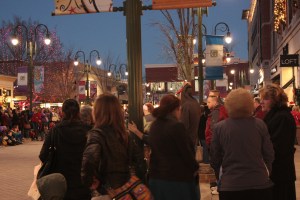
tree lighting c. 2012, EE
tree lighting
c. 2012, EE

It’s a shared laugh, a shared burden, even a shared shoulder. Sometimes it speaks just the right words, with or without tangled tongue, and sometimes it holds its peace.

One of the most well-known, oft-quoted definitions of love, one we can all embrace:

Love is patient, love is kind. It does not envy, it does not boast, it is not proud.

It is not rude, it is not self-seeking, it is not easily angered, it keeps no record of wrongs.

Love does not delight in evil but rejoices with the truth.

It always protects, always trusts, always hopes, always perseveres.

Love never fails.

(I Corinthians 13:4-8, NIV)

This holiday season, I wish you peace, hope, and much love.

*     *     *

UPDATE (12-21-12): In an ironic twist, who should call this afternoon but the uncle mentioned in the post above. He wanted to speak with my mother, but she was at work, so he chatted with me. Yes, chatted.

Thirty years, thousands of miles, and a great amount of both reflection and forgetfulness can lead to mutual Christmas wishes. Crazy. And full of grace.


Now, Where Was I?

NaNoWriMo is over. I barely broke 30,000 words, so I didn’t win a web badge or a downloadable certificate, but progress was made on a dusty manuscript, too long neglected because its author is too easily distracted. With life tugging on my attention, I need to remember why I write. I need to remember to write.

Ever have those days when you forget to eat? Or go for hours before remembering that, oh, yeah, the reason you originally left the office was because you had to use the restroom?

Lately, that’s me and writing.

After about a year or so of acute manuscript neglect, I’ve lost my way with the plot, characters, dialogue, you name it. This past month, I floundered in a mire of old notes, some so oblique I no longer know what I intended.

It’s not that I haven’t been writing. I’ve been cranking out all sorts of small projects, just not working on any of the unfinished novels. The only complete manuscript has been sent out, and is most likely lying in a publisher’s slush pile, awaiting perusal by a reader who will decide whether or not it advances to the editor’s desk.

Despite uncertainty how to proceed, I haven’t grown bored with the novels. If the author’s uninterested, how much more the readers! No, it’s time to become reacquainted with the stories. If I can’t recall my original intentions for their progress, well, then, who says I can’t imagine something new?

When I asked a plot question of a fellow author whose romantic suspense novel I recently edited, she replied, “The story has to happen that way so (a later dramatic event) can happen.”

She refused to plug a plot hole by approaching her story from a new angle. I’ve been there a time or two: This must happen because that must happen.

waiting for the paradec. EE, November 2012
waiting for the parade
c. EE, November 2012

Says who?

Says me?

Well, since I’m in charge, I can change my mind. I can adjust the plan, redirect the characters, change the venue of an action scene, put one character’s dialogue into a different character’s mouth. It’s all in my hands. I am the master of the universe! Bwah-ha-ha-ha!

So. That’s all sorted.

Now, where was I?

Disappearing Act

Disappearing Act

The blue-and-brown of the hotel room

echoes the shades of my wardrobe,

and I laugh inside.

I am neither as old as the room

nor as bland as the beige-patterned carpet,

but I like the friendliness

of comfortable colors.

In them, I do a disappearing act,

and strangers look past me, through me,

an invisible writer scribbling down their words,

preserving their appearance like leaves

pressed between the pages of a book.

c. EE

October 2003

Treasure

The following short-short story was written October 10, 1995, in a journal I kept beside the bed in order to record thoughts and ideas, even dreams. I still keep a journal by the bed.

This little tale came just as I was falling asleep, and I haven’t done anything to it since, except for transcribing it to the computer. It came to mind this Thanksgiving as I considered all the things for which I’m grateful, and how sometimes blessings come in disguise.

Treasure

One day, the young boy’s tutor tried one last time to show him the unimportance of physical beauty. The boy, handsome and groomed and well-deported, was nonetheless reluctant to follow his tutor’s request to enter the small, out-of-the-way room.

“Very well, then,” said the tutor, calmly closing the door and dropping the heavy key into his pocket. “We shall leave these treasures for another time, and immerse ourselves in a sea of mathematics.”

The handsome boy shook his curls and thrust out his chin. “No! Show me this room!”

The tutor’s brows arched. “Oh! I’m so sorry, Master. I thought you were not interested in this room.”

“I’d rather see this room than study more numbers!”

“Then mathematics, it is.” The tutor tucked a large volume securely under his arm and proceeded toward the library at a quick and deliberate pace. Reluctantly, the boy followed, scowling and far slower than his teacher.

Later, while laboring through a particularly intricate piece of poetry, he looked up suddenly and demanded, “What is in the room?”

The tutor shrugged and twirled his pen. “Oh, nothing much. Then, again,” he leaned across the desk, “it could be something very much indeed.”

He held up a mirror that lay beside a lamp. “Look into this.”

The boy did so, and smiled. It was a pleasing sight, he thought, adjusting his collar and smoothing back his curls.

“Is it you?” asked the tutor.

“Of course, it is!” replied the boy, astonished yet sneering. “What would you expect?”

The tutor smiled. “Oh, no! This is merely an image, a reflection of the real person.” He brought the key from his pocket. “Are you ready for the room?”

“Oh, yes!”

The boy kept himself in check by squeezing his hands together behind his back. The tutor seemed to take an eternity just to unlock the door. It finally opened quietly, falling back to reveal shelves full of old money caskets. Some were plain, some were carved; some were of wood, and some of gold or silver. All were covered with dust.

“Now,” said the tutor triumphantly, “choose the casket with the treasure.”

The boy’s eyes brightened, and he walked toward the shelves slowly, almost reverently. He reached out to open a beautifully embossed casket.

“No, young sir, do not touch. You must go by appearance alone.”

The boy moved down the row. Suddenly, from the corner of his eye, he saw the glitter of a jewel-encrusted lid. Eagerly, he reached for the casket, blew off the dust, and turned to his tutor.

“This is the one!” he crowed.

The tutor just smiled. “Open it.”

The boy threw back the lid, then exclaimed in disgust, “Why, there’s nothing here!”

“Of course not, dear boy,” said the tutor, unruffled. “Try again.”

This time, the boy chose a gold box. Nothing. He picked a silver casket. Nothing. Soon, all the most beautiful caskets were piled on the floor, open and empty. The boy turned to his tutor, eyes flashing.

“What kind of silly game are you playing?” he asked, his face flushed and teeth clenched. “There is no treasure here.”

“Oh, but you haven’t looked yet!”

“What?!” The boy gestured at the pile. “What is all this, then?”

The tutor smiled. “Do you recall a Scripture passage about a treasure hidden in earthen vessels? You would never expect water to come from a wine bottle, nor wine from a common pitcher, would you? I thought you liked a good battle of wits, lad. Try again.”

The boy looked around the shelves one more time. In a spirit of vengefulness, he grabbed the plainest, most scarred casket and flung it open. Inside were lumps of hard black wax.

“Here’s your treasure!” he mocked, thrusting the box at his teacher.

“Why, so it is!”

“You can’t be serious!”

“But I am!” The tutor reached for one of the black wax objects and broke off a piece. Suddenly, an emerald and a patch of gold glittered through.

“What does all this mean?” asked the bewildered boy, gesturing at the caskets surrounding his feet, and indicating the beautiful ring that now lay in the tutor’s palm.

“All that’s gold does not glitter,” the tutor broke open another wax ball to reveal a pearl and diamond brooch, “just as beauty does not indicate goodness.”

He looked the boy straight in the eyes. “So, tell me, did you see yourself, or merely an image, in the mirror?”

[The above story was written just now, for the first time, so it is quite rough. However, I had to write it down before it was forgotten.]

c. EE

The writing is a bit pretentious and awkward — hey, it was scribbled down in a rush! — but I may clean it up someday, maybe compile an anthology of my short writing (essays, poems, stories). It’d be nice, too, if my photography skills had advanced enough that I could enhance the text with photos. Someday. Right now, I’m working on a novel-length manuscript, and then there’ll be another two novels (at least): one incomplete, one not yet begun. I’m not sure which is more difficult: a sprawling novel that allows me room to explore the characters and the setting, or a short story that forces me to keep the narrative pointed and contained. But that’s fodder for another blog post.

Those Times Between

A scheduled writers meeting could have gone awry Sunday afternoon. We arrived to find a sign on the door: the cafe was closed due to maintenance issues.

When we retreated to our second option, the establishment was full to overflowing: no parking, no tables.

The weather, however, was beautiful. November eighteenth, sunny and mild. An unexpected blessing.

So we pulled two of the metal outdoor tables side-by-side, ordered food and drink, and commenced writing. Only as the sun slanted westward and cast us in shade did we finally go inside. By then, however, the cafe had emptied, and we could spread out our notebooks and computers, and warm ourselves by the fire.

In one of our writing lulls, when we shared ideas and quiet conversation, I recalled this poem, written extemporaneously on another autumn afternoon:

c. EE, October 2012

Those Times Between

Thank You, God, for mild spring

and autumn,

those times between when we can catch our breath

and stand

unhindered by extremes of cold or heat,

and recall

there is a rest waiting

for us

if we will but let go those things we clutch

so tightly

their spring colors transform to autumn hue.

Life is

only truly lived free.

March 25, 2007

c. E. Easter

Paper Mountains

I wrote this essay a few years ago for a contest. The entry didn’t win, but it still expresses my thoughts:

Paper Mountains

I believe many things, but what I am seeing clearer each year is this: life is too short to be blunted by the notion that what is difficult should not be done; that only what is easy should be attempted; that even noble ends, if they cannot be achieved instantly or with minimal discomfort, must be set aside and replaced by what requires little sweat, little patience, little sacrifice of any kind.

I am a writer. My publishing accomplishments are few: essays, articles, short stories, poems. However, I want to be a novelist, and to that end I put one word at a time on paper until I have a sentence, a paragraph, a page, a chapter, a manuscript. Some of my fellow writers tell me I am creating stories no one wants to read. I am doing what cannot be done.

But how does anyone know what the end will be? I am still climbing the mountain, and have not yet seen the view from the top. If others cannot see the mountain, is the mountain no longer there? Because others are weary, must I be content to sit beside them? If they seek another way, must I go with them? Must I convince myself—as some have—that half a journey is the entire trip?

Life so rarely happens as we would wish it. My teachers and friends were convinced that I would publish my first novel by age sixteen. That might have made me a novelty—no pun intended—but it might also have made a shallow book.

Now more than twice sixteen, I still have moments of doubt, of youthful uncertainty that anything I write is worth reading. Greater than my insecurity, however, is the knowledge that what makes me a writer is not measured by how I compare to others or how much money I make or how many people know my name, but by the fiery words that blister my brain and boil my dreams until the only way to cool my burning fingertips is to write. I am a writer because not writing is not an option.

Artists draw simulations of life. Photographers capture time. Sculptors push clay into action. Writers create movies for the mind.

The characters that people my thoughts are alive and very real, but they will remain in my imagination—unseen, unheard, unread—until I do the hard work and mold imagination into words on a page.

So the journey will pass—one word at a time, one page at a time—until the day I stand on top of the mountain and see that it is made of paper: reams and reams of it covered with words; wads of it tossed in to wastebaskets; some of it retrieved and smoothed out again and found to be not so bad after all.

This I believe: my greatest challenge is my greatest joy, and I would not have it otherwise.

c. EE

Patriotic Grandmothers

Several years ago, I wrote poems about my paternal grandmother and my maternal great-grandmother, both hard-working women I admired. (Good cooks, too!) They survived troubling times and circumstances I don’t even want to imagine, and they still smiled. Well, they complained a time or two, but what I remember most is their work ethic and their humor, although my great-grandmother’s was less apt to come out to play.

Both loved this country. One grandmother became pen pals with a president and his wife, and another came from “t’ Old Country” and never lost her accent.

Therefore, in honor of those strong women, and as my own nod to my rights as an American citizen on this Election Day, I offer these poems — not high literature, just simple, blunt tributes.

Elsie

Despite a generation’s haze,

her smile still shines

from the photograph,

a girl laughing,

grey head tilted,

audacious youth

in my grandmother’s face.

c. EE

My grandmothers died many years ago. Why, then, do they still seem so alive?

Immigrant

Ellis Island saw her come,

and Lady Liberty lit her way

across a continent

to the logging camps

far from the Old Country,

and something hopeful grew

in the muddy ground

she slogged while cooking and washing

for sawdust-covered timbermen.

Widowhood could not uproot the dream,

nor could a daughter’s disdain.

Faith’s fruit was bittersweet,

but she dwelt beneath its branches,

leaned upon its strength,

and tilled its seeds into my soul.

c. EE

There are times I still want to write them letters, or call them on the phone, or stop by for a visit. What better legacy than that?

New Directions: Old Career to New Career to No Career

This past year — past two years, actually — has been an exercise in living differently. I had the same house and the same job for many years, encountered challenges that took my down and some that spurred me toward newer or better goals, and experienced sorrows I’d rather never happened and joys I never expected.

However, after a weekend with a friend — her brother’s wedding, and all the craziness and fun that entailed — I realized something had to change. Before we said goodbye, we decided that 1) I would prepare my house for sale, and 2) we would return to school and change our careers.

Well, she achieved school, and will graduate in 2013. I was set to start classes, but circumstances conspired otherwise, and I withdrew. An injury kept me semi-handicapped for months. Then family news brought about another change in plans. Then the house sold.

I left it and the old career last year, and turned a part-time editing business into my main endeavor. I made enough money to cover expenses, but I grew to hate editing. I became stressed, easily annoyed, and snappish. In contrast, on writing days, I can be daydream-y and in my own world, but I tend to play well with others, and sleep well, too.

So, last week I came to a decision: I’m going to honor my contracts, and then I’m done editing for a while.

No freelance stuff, no publisher stuff, just my own writing.

Might not be smart from a fiscal standpoint, but I’m hoping for fewer headaches, less frustration, and more creativity.(Translation: more writing.)

Is there something you can do well, but you hate?

____________________

Still trying to catch up on my NaNoWriMo word count, but have been battling illness that saps creativity along with energy.

Regardless of reaching the 50k-word goal or not, I’m using this month as an opportunity to finish a novel that’s been languishing for two or three years. Yeah, the point of NaNo is create something totally new, and be unencumbered by trying to make the new material fit an existing project, but I’m a rebel. Either way, I figure I’ll come out a winner.